
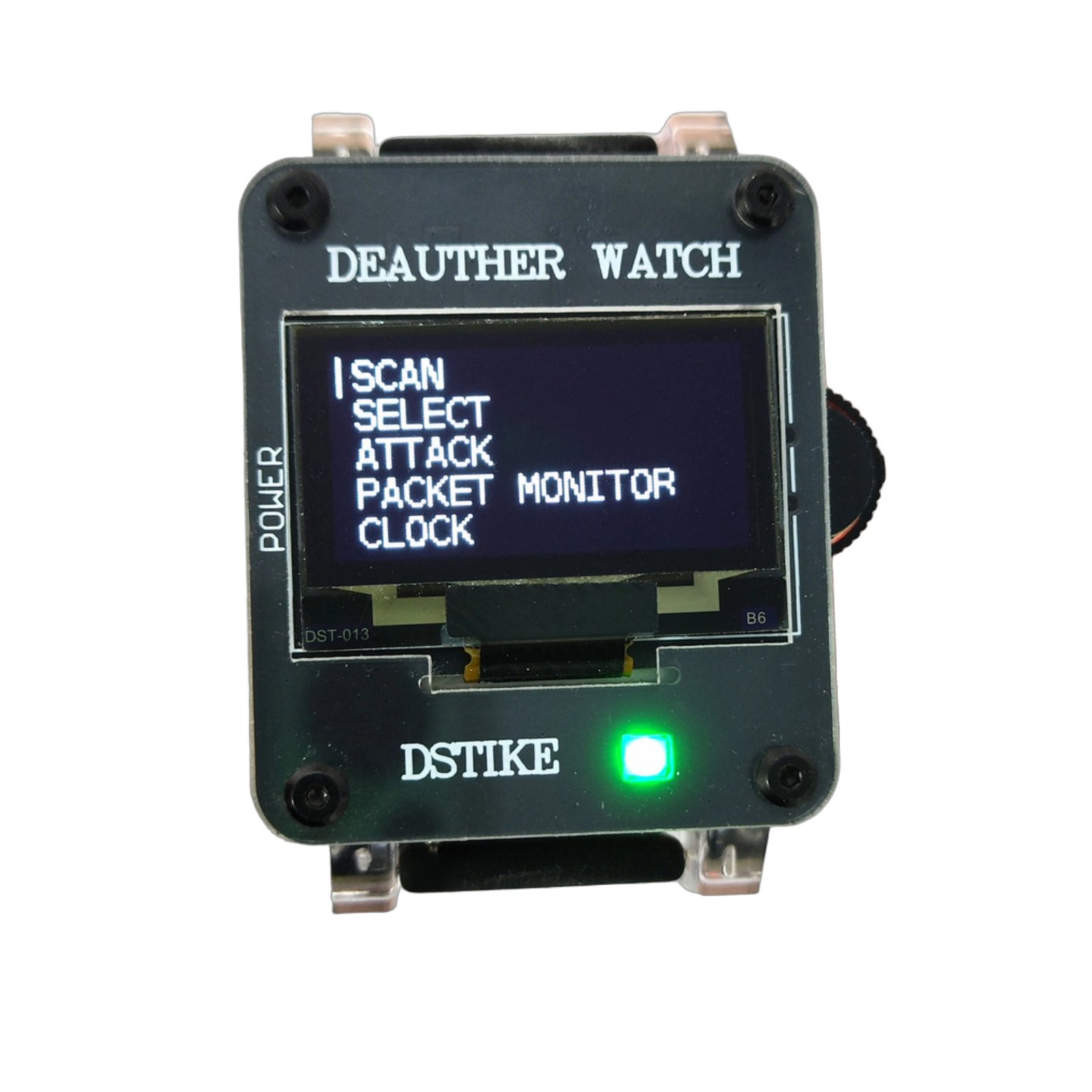
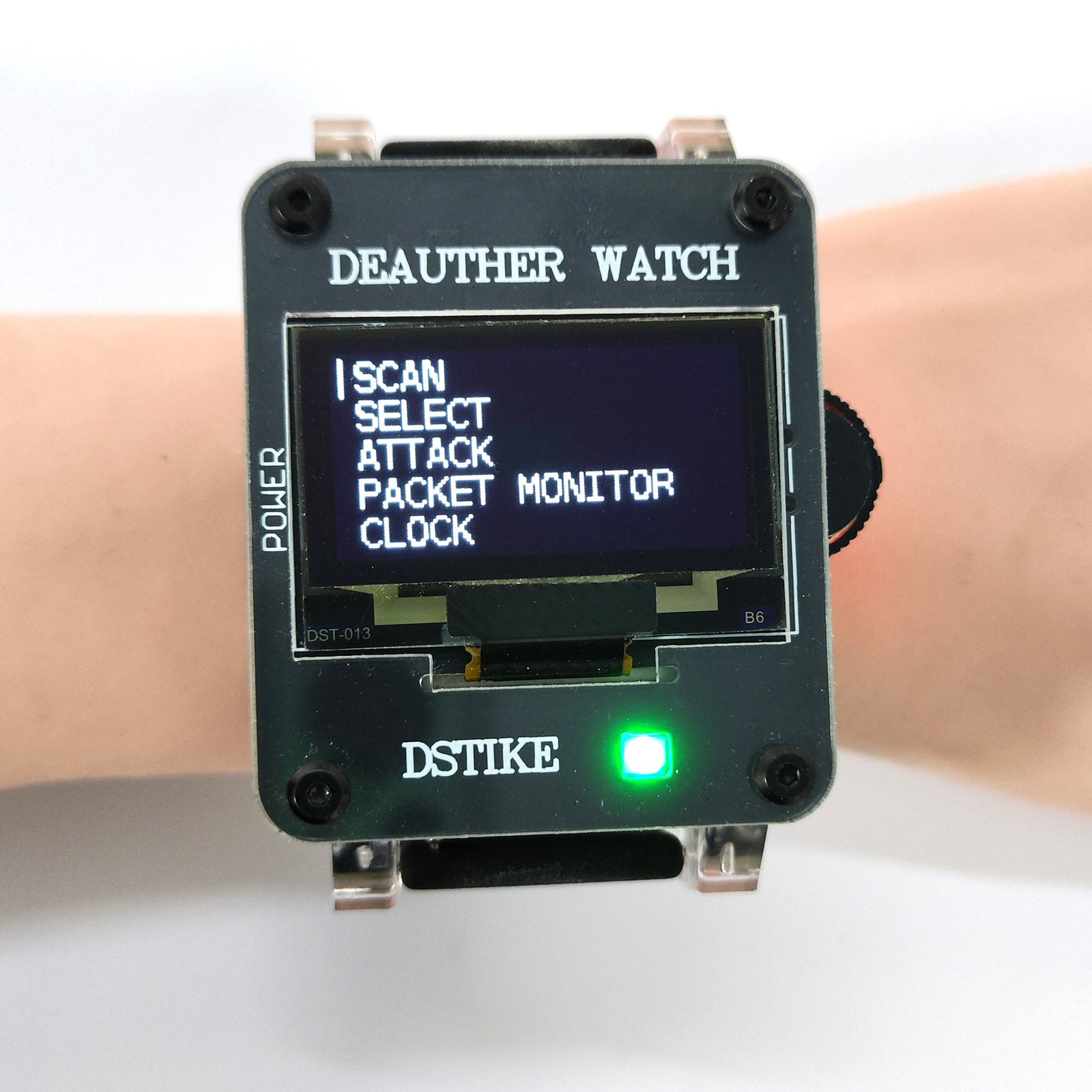
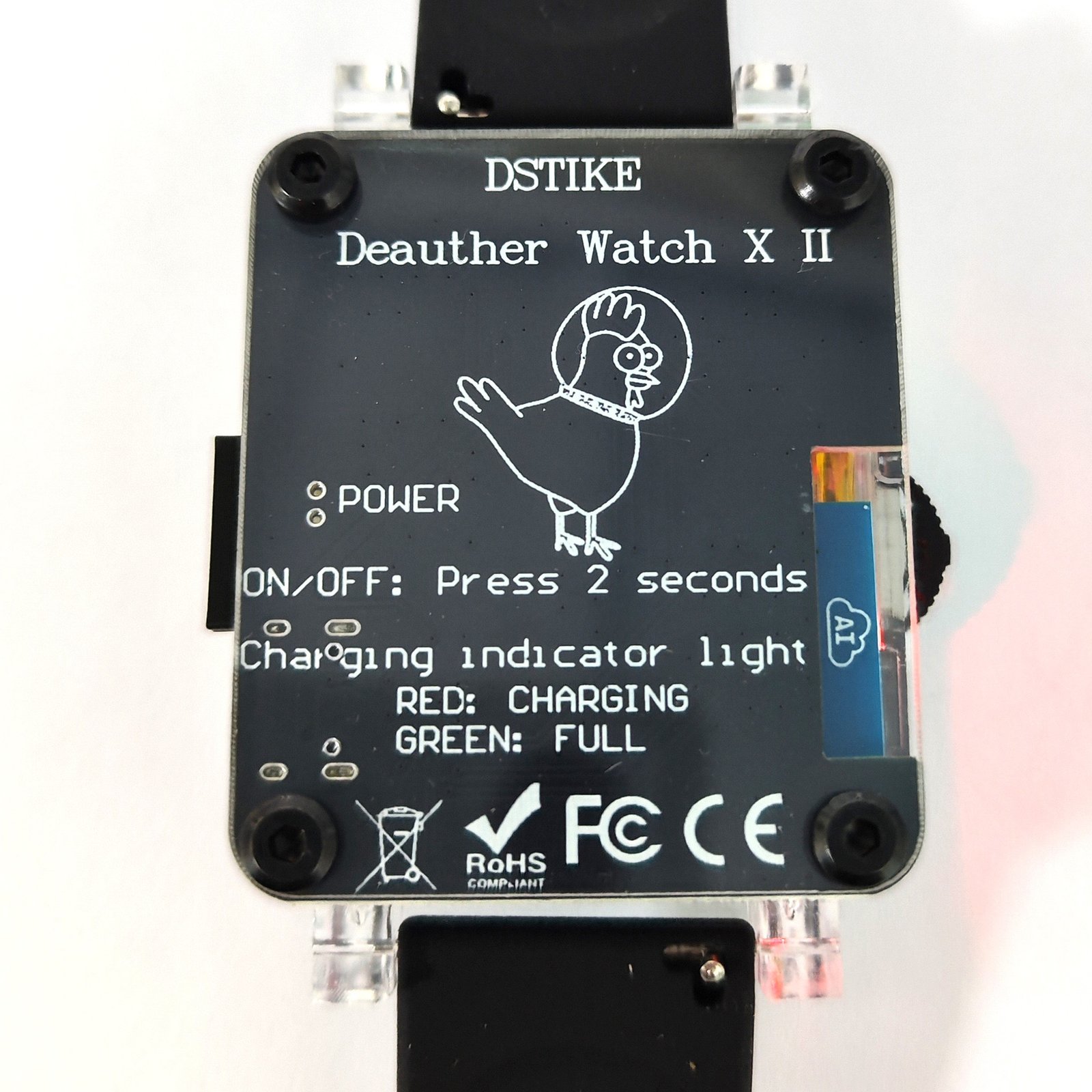
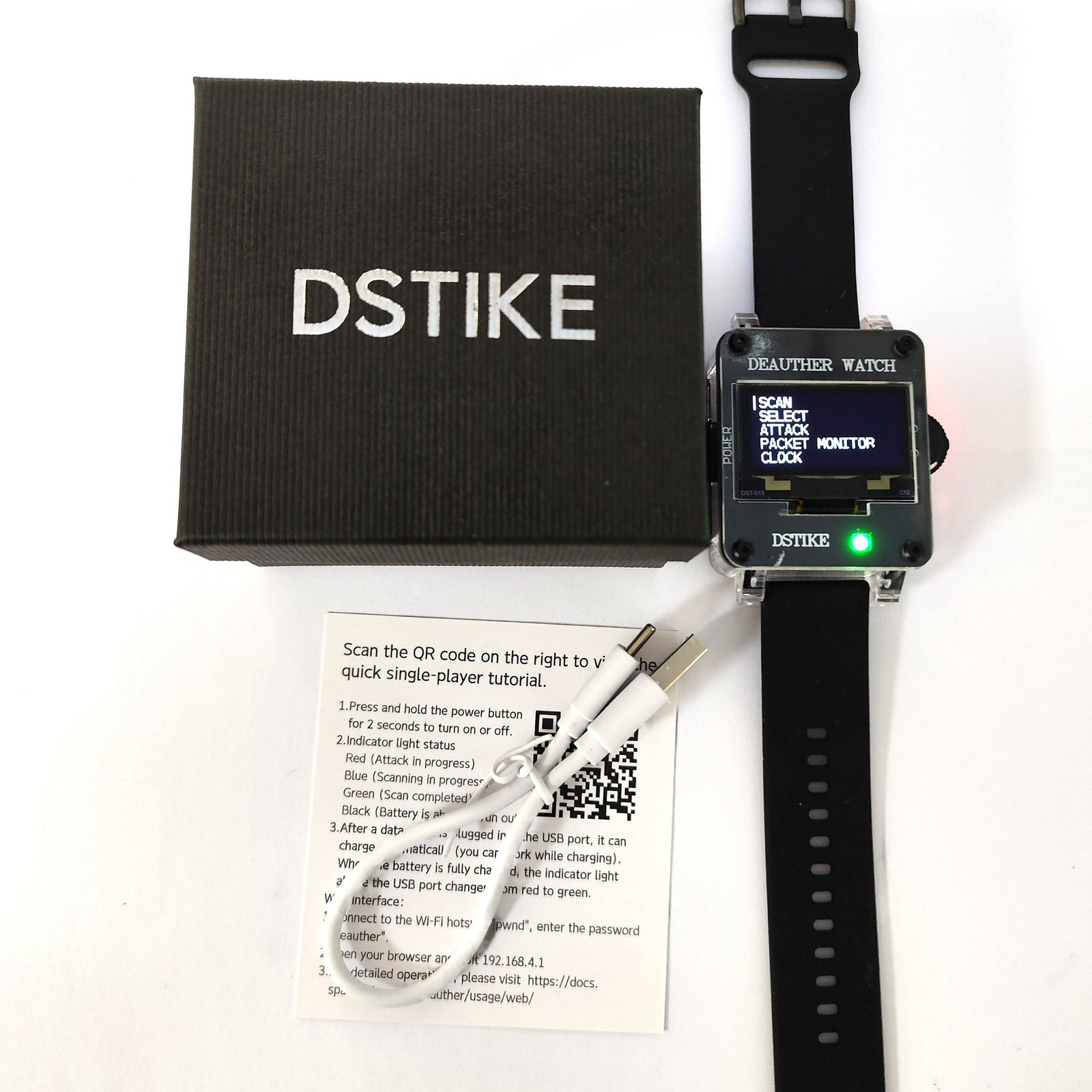
| New Name | Deauther Watch X II | Deauther Watch Y | Deauther Watch Z |
|---|---|---|---|
| Battery | 700mAh | 1000mAh | 1000mAh |
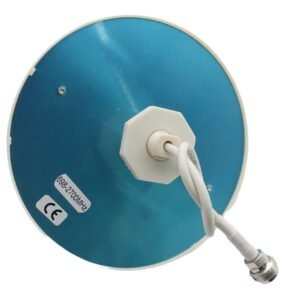
| Antenna Range | 30–50m | 80–100m | 80–100m |
| Color | Black | Black | Black |
| USB | USB-C | USB-C | USB-C |
| Buzzer | Yes | No | No |
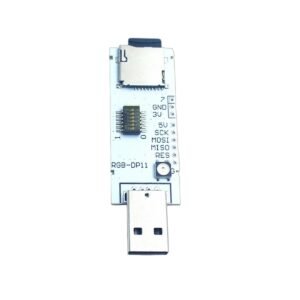
| BadUSB | No | No | Yes |
| TF Card | No | No | Yes |
| Work Time | 7–8h | 9–10h | 9–10h |
| Weight | 62g | 80g | 99g |
| Size (L × W × H mm) | 60 × 50 × 25 | 80 × 50 × 25 | 80 × 70 × 25 |
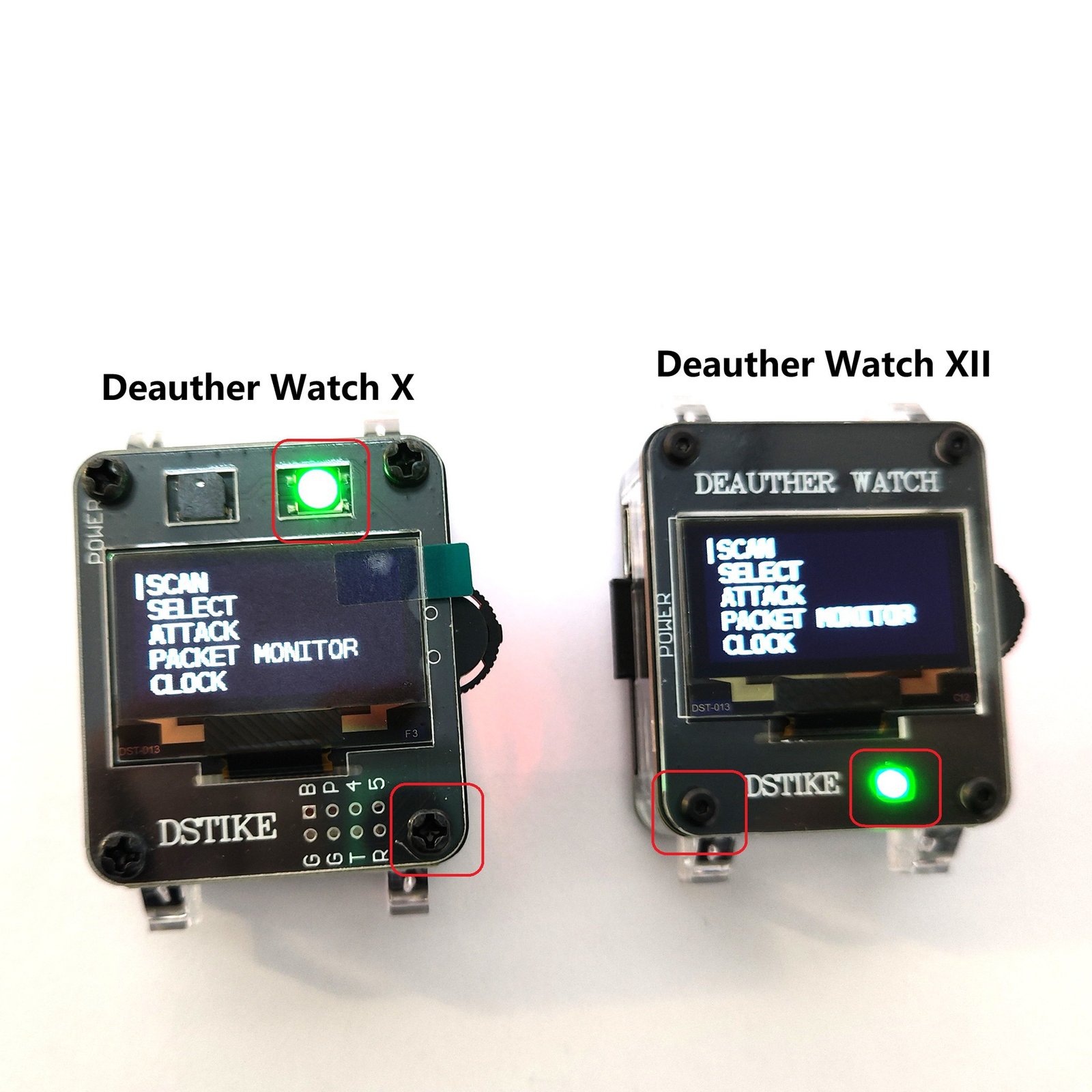
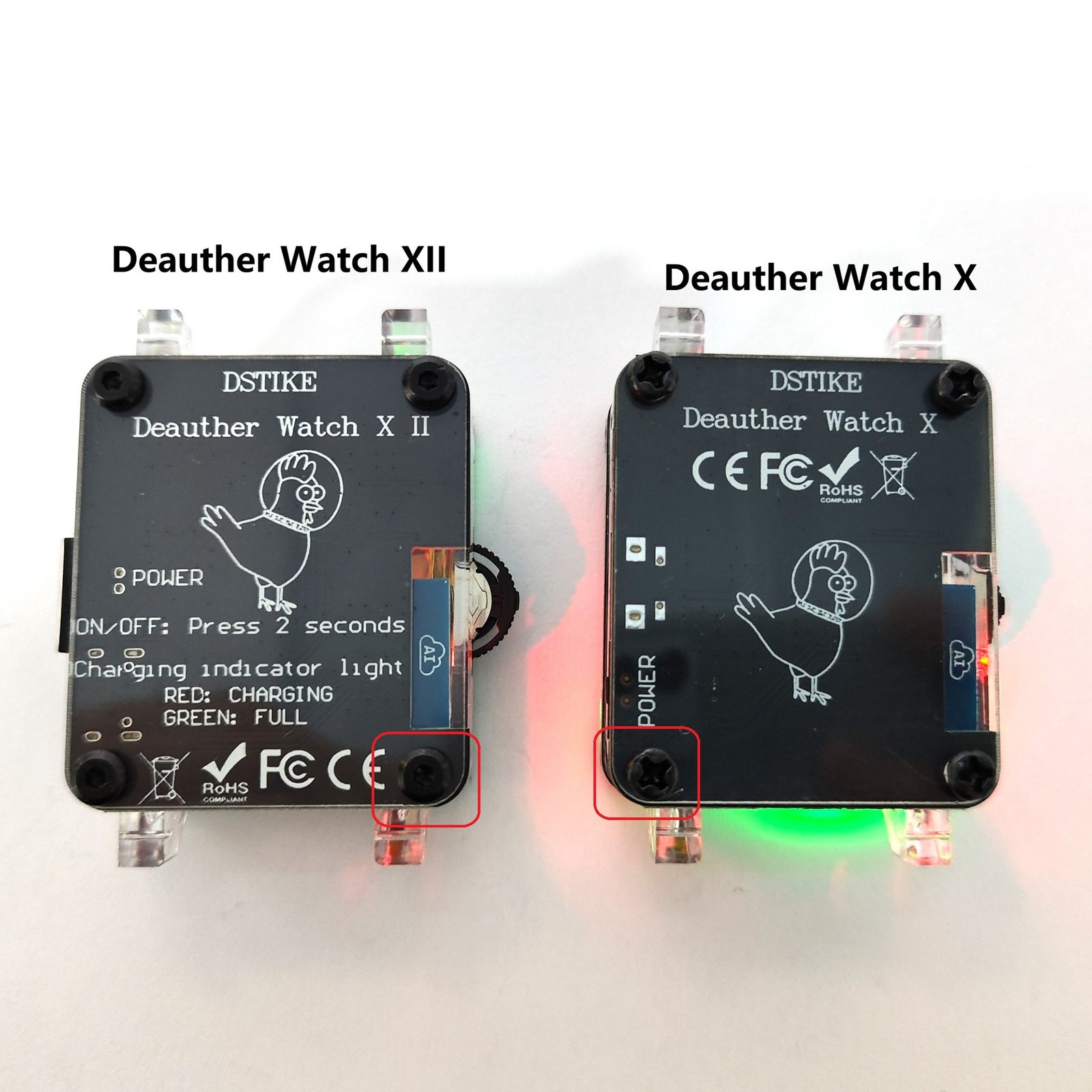
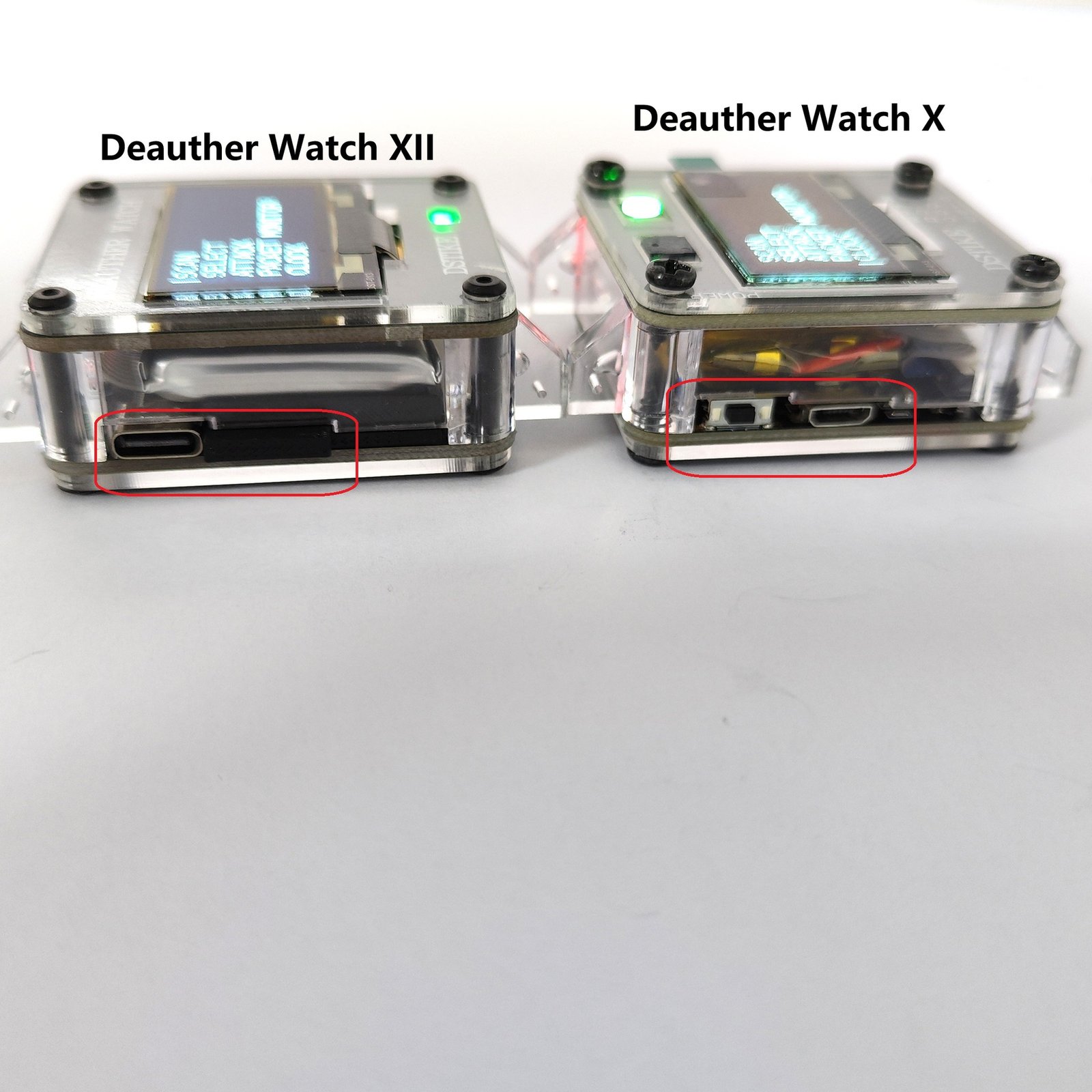
Deauther Watch X II is an upgraded version of X, the difference is:
| Feature | Deauther Watch X | Deauther Watch X II NEW |
|---|---|---|
| USB Port | Micro USB | USB-C (Upgraded) |
| Battery Capacity | 500mAh | 700mAh (Longer Usage) |
| Screw Type | Phillips | Hex Screw (More Durable) |
| RGB LED | WS2812B | WS2812B-2 (Enhanced) |
| Power Switch | Onboard Switch | 3D Printed External Switch |
Take Control of Your Network Experiments
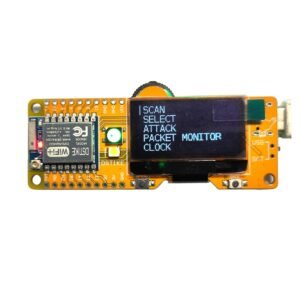
The Deauther Watch is not just a timepiece; it’s a powerful ESP8266 development board integrated into a wearable form factor. Designed for security enthusiasts, developers, and white-hat hackers, this tool allows you to perform WiFi authentication tests, explore wireless protocols, and develop your own ESP8266 software.
Key Features
- WiFi Security Testing: Pre-installed with the latest Deauther software. Perform deauth attacks, beacons, and probes to test your network’s vulnerability.
- Highly Extensible: It’s an open-source ESP8266 development platform. Use the Arduino IDE to flash your own scripts and turn it into any smart device you imagine.
- Long-lasting Power: Equipped with an 700mAh lithium battery and a built-in charging circuit, providing up to 7-8 hours of active use.
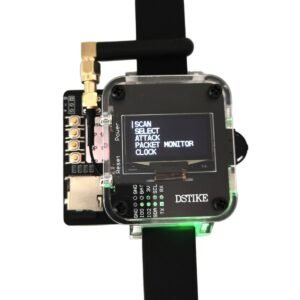
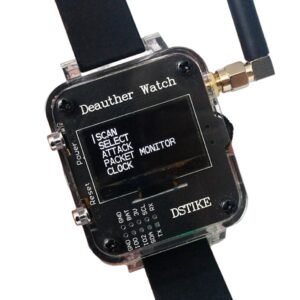
- Intuitive Interface: Features a 1.3-inch OLED display and a 3-way momentary slide switch for seamless navigation through menus.
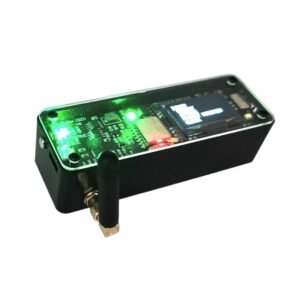
- Full Protection: Comes with a 3D-printed case and a transparent acrylic cover to protect the delicate PCB while showing off its “cyberpunk” internal structure.
Technical Specifications
| Feature | Details |
|---|---|
| Microcontroller | ESP8266(Custom 4MB ESP-07) |
| Battery | 700mAh Lithium Ion |
| Antenna | Built-in Ceramic Antenna |
| Connectivity | USB-C (for charging and flashing) |
| Display | SH1106 1.3″ OLED |
| Display SDA | GPIO 5 |
| Display SCL/SCK | GPIO 4 |
| WS2812b RGB LED | GPIO 15 |
| Button Up | GPIO 12 |
| Button Down | GPIO 13 |
| Button Select | GPIO 14 |
| LED | GPIO 16 |
Function
- Deauther Attack: Disconnect 2.4G WiFi
- Deauther Beacon: Create fake networks
- Deauther Probe:Confuse wifi trackers
- Packet Monitor:Display wifi traffic
- Clock:Display Real Time Clock
- LED:Flashlight
Deauth
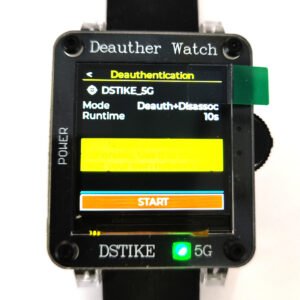
Closes the connection of WiFi devices by sending deauthentication frames to access points and client devices you selected. This is only possible because a lot of devices don’t use the 802.11w-2009 standard that offers a protection against this attack. Please only select one target! When you select multiple targets that run on different channels and start the attack, it will quickly switch between those channels and you have no chance to reconnect to the access point that hosts this web interface.
Beacon
Beacon packets are used to advertise access points. By continuously sending beacon packets out, it will look like you created new WiFi networks. You can specify the network names under SSIDs.
Probe
Probe requests are sent by client devices to ask if a known network is nearby. Use this attack to confuse WiFi trackers by asking for networks that you specified in the SSID list. It’s unlikely you will see any impact by this attack with your home network.
What’s in the Box?
- 1 x Deauther Watch (Assembled)
- 1 x USB Data Cable
- 1 x Quick Start Guide
Disclaimer
I designed this development board especially for Spacehuhn’s great project: ESP8266 Deauther. It has been authorized by him and is officially supported. This project is a proof of concept for testing and educational purposes. Neither the ESP8266, nor its SDK was meant or built for such purposes. Bugs can occur!
This device is intended for educational and testing purposes only. Please use it responsibly and in accordance with local laws and regulations regarding network security and privacy.
Attention
When the RGB indicator light is off, please charge it promptly. The charging time is 4 to 5 hours. When fully charged, the indicator light changes from red to green.
FAQ
5G Support
This project is done for the ESP8266, a 2.4GHz WiFi SoC. Therefore, it cannot attack 5GHz WiFi networks.
Attack stopping after 5min
To prevent abuse, an attack timeout of 5 minutes is set by default. This is not a bug. It’s a feature. To change this, you have to edit the attackTimeout setting.
This product is intended for educational and research purposes in controlled environments only.
Anan Sukjai –
Good experience overall.
Somchai Chaiya –
Consistent results.
Phan Duc –
Useful for projects.
Park Jiwon –
No complaints.
Kim Minho –
Stable operation.
Sun Jie –
Good learning tool.
Zhou Ming –
Satisfied with the purchase.
Adeel Ahmad –
Easy to carry.
Bilal Sheikh –
Solid upgrade.
Zubair Khan –
Reliable device.
Imran Qureshi –
Good performance overall.
Neha Kapoor –
Nice hardware design and improved durability.
Sanjay Patel –
The upgrade is worth it if you already used the previous version.
Vikram Iyer –
Works reliably once properly set up. No unexpected issues.
Viktor Kral –
Good tool for exploring IoT concepts in a practical way. Learned a lot using this.
Tomasz Zielinski –
Firmware flashing was straightforward. Everything worked as expected.
Radek Svoboda –
I¡¯ve been using it regularly and it hasn¡¯t disappointed. Reliable and consistent performance.
Sergei Antonov –
Nice improvement in overall usability. The new switch design is more practical.
Pavel Novak –
The upgraded components make it feel more premium. Definitely a step up from the previous model.
Jarek Nowak –
I like how customizable the firmware is. This device gives you a lot of freedom to explore different setups.
Hannes Bauer –
The learning curve is still there, but that¡¯s expected. Once you get familiar with it, it becomes a very useful tool for experimentation.
Igor Smirnov –
Compared to the first version, this one feels more polished. The overall experience is smoother and more reliable.
Gregor Ivanov –
Nice compact device with plenty of functionality. I mainly use it for lab testing and educational purposes. It has been very consistent so far.
Emil Horvath –
I¡¯ve been experimenting with different firmware builds and the performance has been stable. The battery upgrade makes a big difference during longer sessions.
Filip Novak –
The USB-C upgrade alone makes this version much easier to use. Charging is faster and more convenient. Small change, but very impactful.
Arjun Nair –
Great for developers and hobbyists alike. Plenty of room to experiment.
Choi Minseok –
Nice design.
Chen Hao –
Good build quality.
Priya Menon –
Battery holds up well under regular use.
Oskar Lindberg –
Works well in controlled testing environments. Stable performance and no major issues.
Yuri Mikhailov –
The device is lightweight but feels sturdy. Easy to handle during testing.
Alfred Novak –
I upgraded from the previous version and immediately noticed the improvements. The USB-C port is much more convenient and the battery lasts longer during testing sessions. Overall, a solid upgrade.
Lee Donghyun –
Very practical device.
Krzysztof Mazur –
Battery life is significantly improved. I can run longer tests without needing to recharge.