
You are ten miles offshore in a choppy swell, or hauling a heavy load up a steep grade. Suddenly, your engine sputters, coughs, and dies. You crank the ignition, but you get nothing.
Nine times out of ten, the culprit isn’t a snapped belt or a blown gasket. It’s bad fuel.
Modern diesel and ethanol-blended gasoline act like sponges, pulling moisture directly from the humid air inside your fuel tank. When that water reaches your high-pressure fuel pump and injectors, it acts like liquid sandpaper. It causes rapid corrosion, cavitation, and eventually blows the tips right off your injectors.
If you are running a marine outboard, a small diesel tractor, or a commercial generator without a dedicated water separator, you are playing Russian roulette with a $3,000+ repair bill. Today, we are breaking down why the R12T (FS19802) Fuel Water Separator with a Solid Aluminum Head is the only reliable insurance policy for your fuel system.
1. The Real Threat: Phase Separation and Cavitation
Standard inline fuel filters are designed to catch dirt and rust. They do absolutely nothing to stop water.
When water passes through a modern fuel injector operating at 30,000+ PSI, it instantly vaporizes, creating microscopic shockwaves (cavitation) that pit and destroy the metal internals. Furthermore, in gasoline outboards, ethanol can absorb so much water that it physically separates from the fuel (phase separation), sending a slug of pure, non-combustible water-alcohol mix straight into your cylinders.
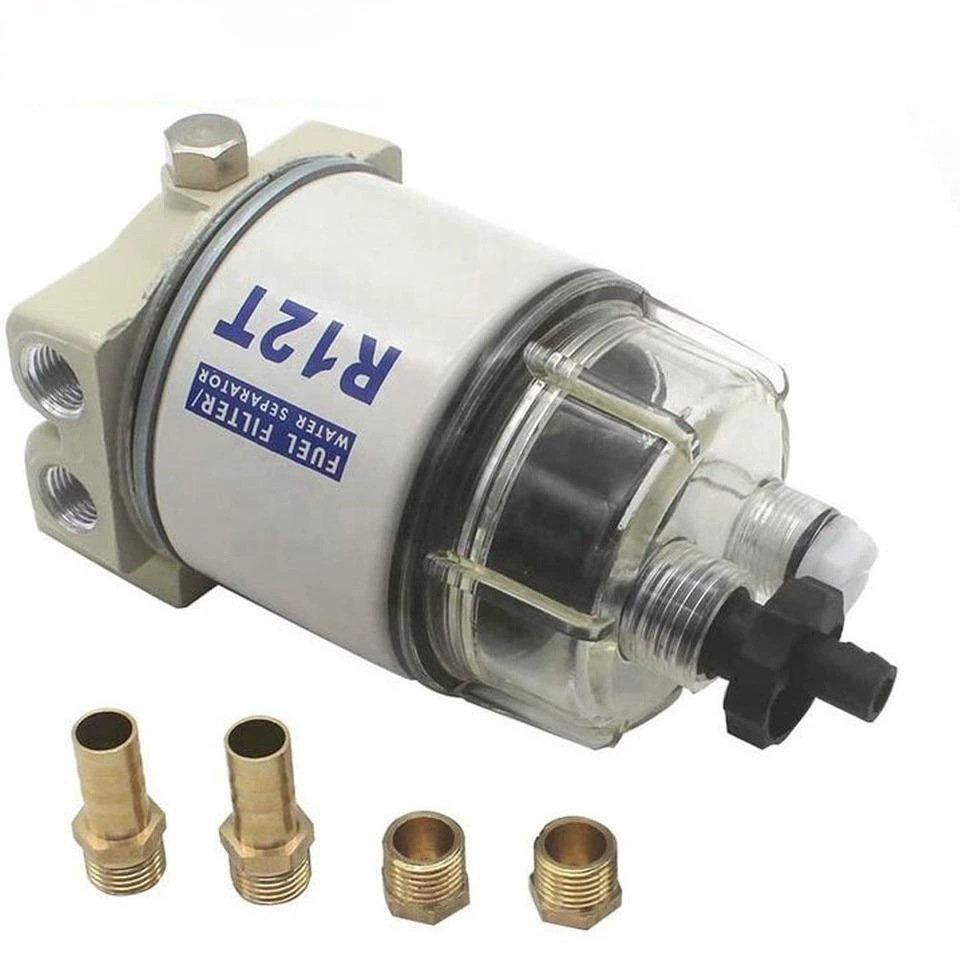
The R12T solves this using a 10-micron Aquabloc media. It physically repels water molecules, forcing them to bead up and drop into the clear collection bowl at the bottom, while allowing only clean, pure fuel to pass through.
2. Evaluation: The “Plastic vs. Aluminum” Trap
If you look around the market for R12T assemblies, you will see a lot of cheap knockoffs featuring black plastic mounting heads. Do not buy them.
Engine bays and boat hulls are hostile environments. Constant vibration, extreme heat cycling, and exposure to UV rays cause those cheap plastic threads to warp and crack.
- The Diesel Air Leak: On a diesel engine, a cracked plastic filter head will suck air into the fuel lines. A diesel engine with air in the lines will instantly stall and refuse to start until you bleed the entire system.
- The Marine Fire Hazard: On a gas outboard, a cracked plastic head will leak raw fuel into the bilge—a catastrophic fire hazard.
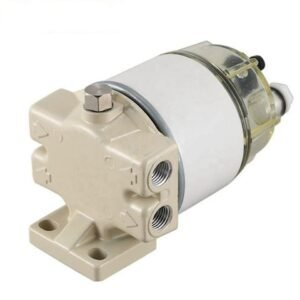
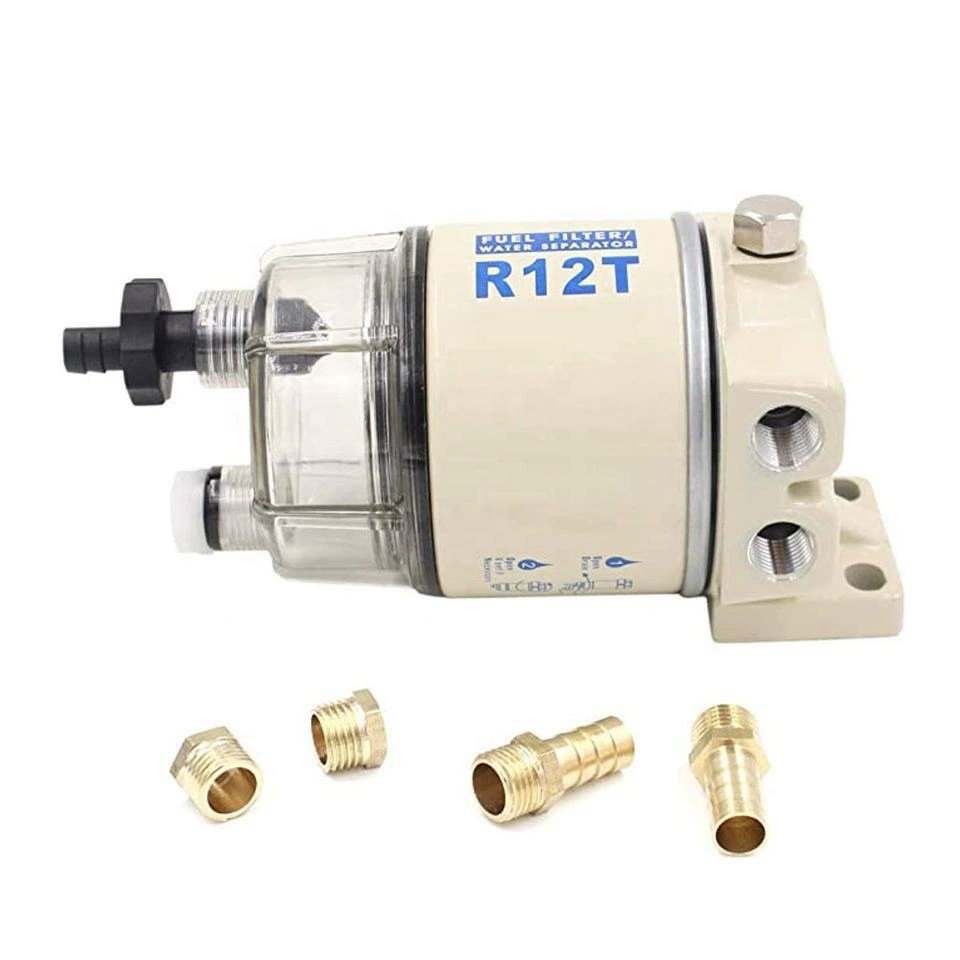
Our premium R12T assemblies feature a CNC-machined solid aluminum head. It provides a permanent, distortion-free seal that easily survives the violent pounding of a boat hitting waves or a tractor bouncing across a field.
3. Selection: Where Does the R12T Belong?
The R12T (which directly replaces the Racor 120AT and Cummins FS19802) is a compact, high-efficiency unit rated for a maximum flow of 30 Gallons Per Hour (114 LPH).
- The Perfect Fit: It is the absolute gold standard for Yamaha, Mercury, and Honda marine outboards, small to mid-sized diesel tractors (Kubota, John Deere), and stationary diesel generators.
- When to Size Up: If you are running a massive 6.7L Cummins or a twin-turbo marine diesel pushing over 500 horsepower, you will exceed the 30 GPH flow rate and should look at our larger industrial separators.
4. Post-Purchase: The Mechanic’s Golden Rules
So, you bought the aluminum R12T. Here is how you install and maintain it so it actually protects your engine:
- Rule #1: No Teflon Tape. Never wrap the brass inlet/outlet fittings in white Teflon tape. The threads will shred the tape, and those tiny white strips will flow directly into your injectors and clog them. Use a liquid, fuel-rated thread sealant paste.
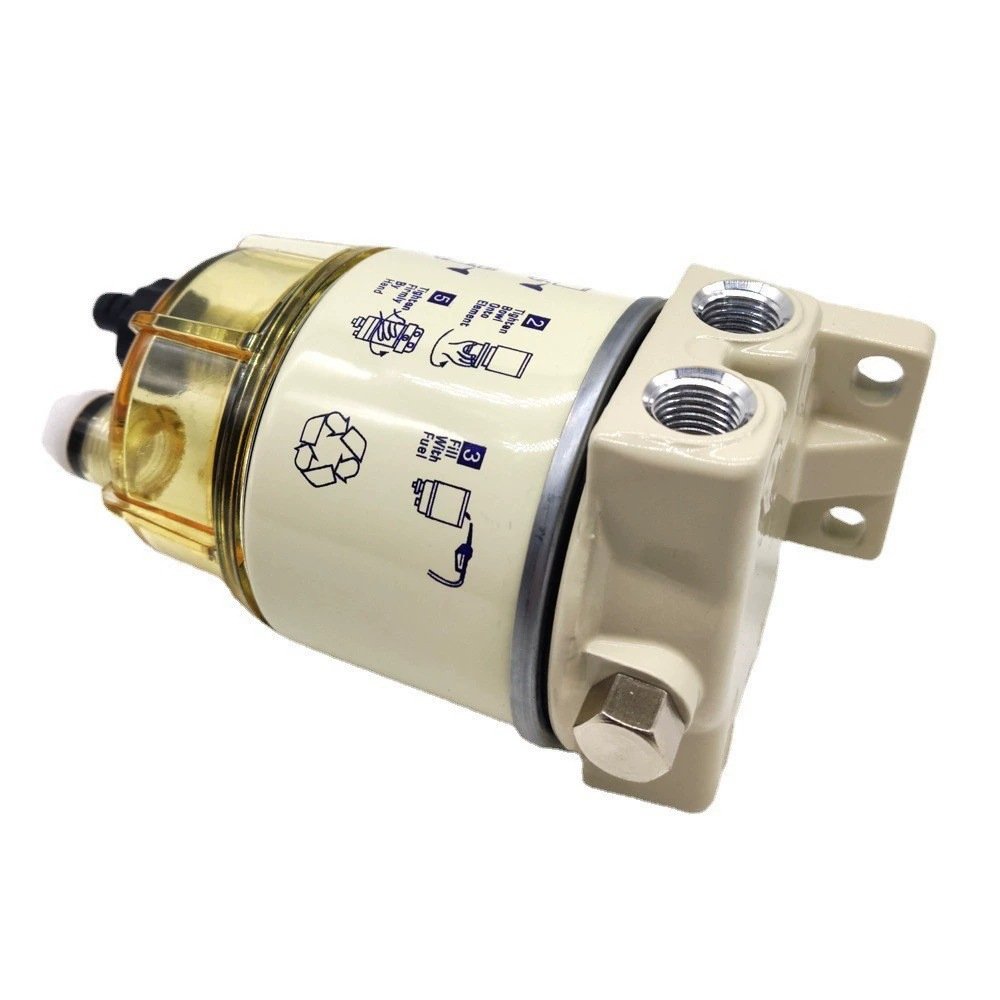
- Rule #2: Prime the Filter. Before spinning the new filter onto the aluminum head, fill it to the brim with clean fuel. Installing a dry filter forces your fuel pump to suck a massive pocket of air, which will air-lock a diesel engine instantly.
- Rule #3: Check the Bowl. The clear plastic bowl at the bottom is UV-resistant. Make it a habit to glance at it before starting your engine. If you see water pooling at the bottom (it looks like a distinct bubble or layer below the fuel), simply open the bottom petcock valve to drain it out.
People Also Ask (PAA)
Can I use the R12T for gasoline/petrol engines? Yes. The R12T and its Aquabloc media are fully compatible with both diesel and gasoline (including ethanol blends). It is extremely popular for 2-stroke and 4-stroke marine outboards.
How often should I change the R12T spin-on filter? For recreational boats and tractors, replace the spin-on canister once a year (typically during winterization or spring maintenance) or every 100 engine hours. If you get a bad batch of fuel and the filter clogs with sludge, change it immediately.
Stop Gambling with Bad Fuel
Don’t wait until your engine starts sputtering miles away from the dock or deep in the woods. Upgrading your filtration system takes 30 minutes and a pair of wrenches.
Protect your expensive injectors and guarantee your engine starts every single time. Grab the [Premium Aluminum R12T Fuel Water Separator at FixPartHub] today, and keep the water where it belongs—outside your engine.
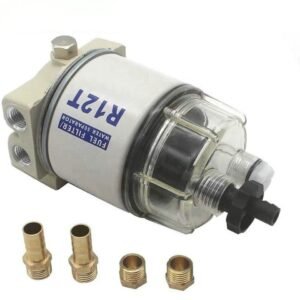
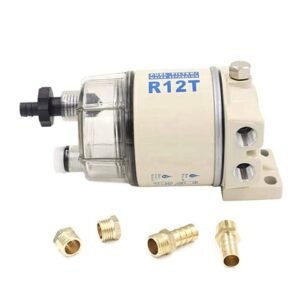
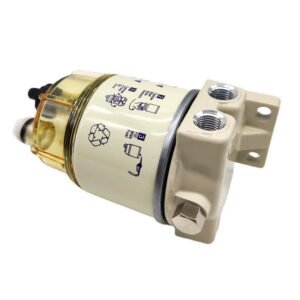
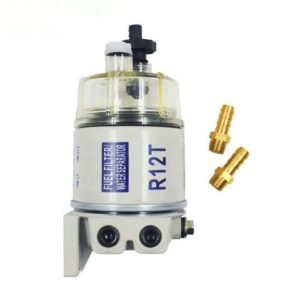
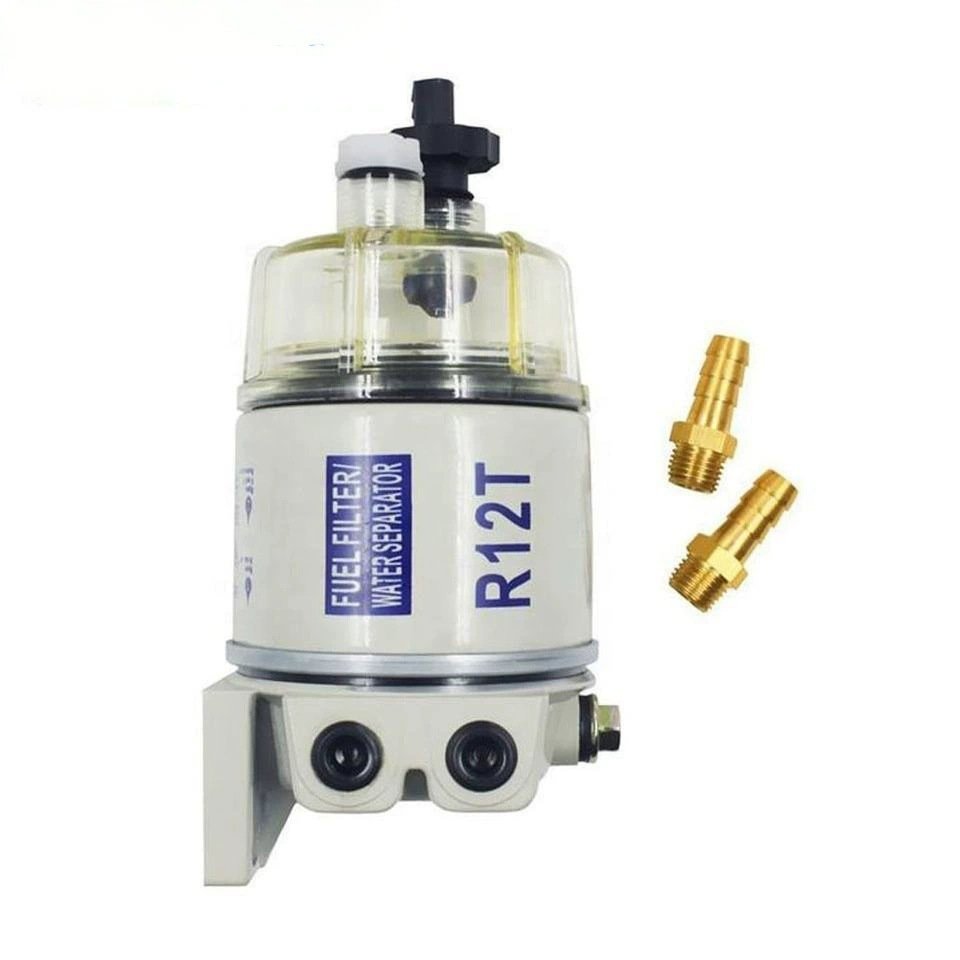
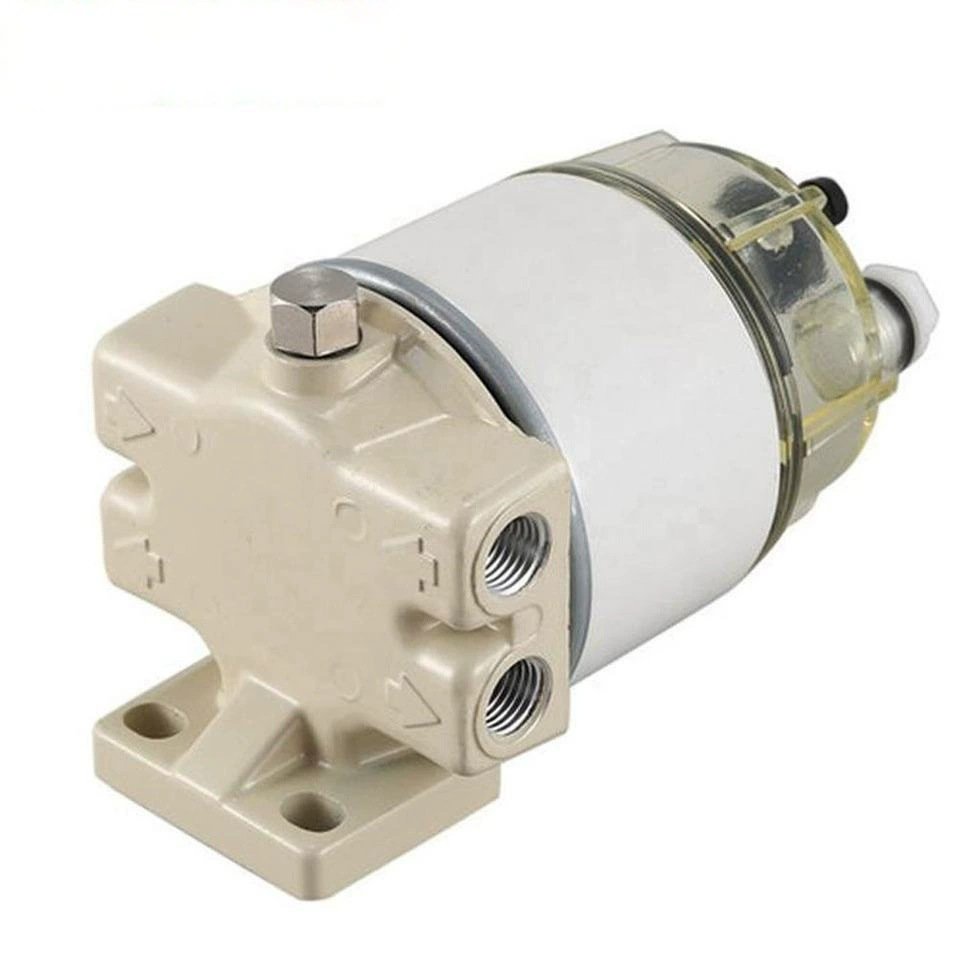
Premium R12T Aluminum Fuel Water Separator | FS19802 | FixPartHub
- Protect Your Expensive Fuel Injectors: Modern ethanol-blended gasoline and diesel fuel naturally attract moisture. When water passes through high-pressure fuel injectors, it causes instantaneous rust, cavitation, and catastrophic engine failure. This 10-micron filtration system traps 99% of free water and microscopic debris before it ever reaches your engine.
- The “Crack-Proof” Aluminum Head Upgrade: Standard aftermarket filters use cheap plastic mounting heads that warp, crack, and leak fuel under engine bay heat and heavy marine vibrations. Our assembly features a heavy-duty, CNC-machined solid aluminum head, guaranteeing a permanent, leak-free installation in the harshest environments.
- Reusable Clear Collection Bowl: Take the guesswork out of fuel maintenance. The UV-resistant clear bottom bowl allows you to visually inspect for trapped water at a glance. When water accumulates, simply twist the self-venting bottom valve to drain the contaminants safely without needing to remove the entire filter.
- Universal Marine & Industrial Fitment: Designed for highly customized fuel routing. The aluminum head features multiple NPT ports, allowing you to feed multiple engines or run dual-filter setups easily. Perfect for Yamaha/Mercury marine outboards, small diesel tractors, and commercial generators.
- FixPartHub Professional Standard: Stop stalling at sea due to bad fuel. Pro Tip: ALWAYS prime the new filter by filling it with clean fuel before spinning it onto the housing to prevent air-locking your engine’s fuel pump! Need to upgrade your brittle rubber fuel lines? Browse our catalog for marine-grade fuel hoses!
| Buy More, Save More | Quantity | Discount |
|---|---|---|
| Bulk Discount | 2 | 5% |
| Bulk Discount | 3 – 5 | 10% |
| Bulk Discount | 6 – 19 | 15% |