
Cutting hardware mortises by hand is a massive mechanical liability on modern job sites. Wood grain is unpredictable, and relying entirely on muscle memory to carve out a perfectly flat, square pocket is inefficient. To achieve a factory-level installation where your strike plates and door latches sit dead-flush against the wood, you need to transition to mechanical routing. The industry standard is pairing a standard compact router with a precision Door Latch and Strike Mortise Tool.
Chisels vs. Templates: The Mechanical Evaluation
Let us look at the mechanical realities of why freehanding your door hardware is costing you time and compromising your finish work.
| Method | Depth Control | Speed | Tear-Out Risk |
|---|---|---|---|
| Freehand Chiseling | Poor. Dictated entirely by wood grain and density. | 5 to 10 minutes per pocket. | Extremely High. |
| Freehand Compact Router | Excellent depth, but edge boundaries are easily breached. | 3 minutes. | Medium. |
| Mortise Template + Router | Flawless. Router base guarantees perfectly uniform depth. | Under 30 seconds. | Zero. The template locks the cutting path entirely. |
Scenario Selection: Adapting to the Material
A professional strike plate template adapts securely to the exact material you are milling without causing surface damage.
🚪 Pre-Primed MDF Jambs
MDF trim is essentially compressed paper dust. When a chisel bites into it, the surface tears out in massive chunks. A router template acts as a zero-clearance shield. By guiding a spinning carbide bit against the rigid jig wall, you shear through the MDF cleanly without any blowout.
🌳 Solid Oak Slabs
Hardwood features interlocking grain that aggressively deflects hand tools. The mortise jig locks tightly onto the door edge, allowing the 20,000 RPM pattern bit to obliterate the hard fibers uniformly. The result is a glass-smooth floor for the latch plate to rest on.
🏗️ Vertical Installations
Routing a strike plate horizontally on a workbench is easy; doing it vertically on an installed jamb is a balancing act. The jig clamps tightly to the vertical casing, providing a stable, flat shelf that prevents your router base from tipping and ruining the cut.
Post-Purchase Maintenance: Keeping Your Jig Dialed
A precision template is only as good as the care it receives in a dirty shop environment.
- Inspect the Guide Bearing: Ensure the top bearing on your router pattern bit spins freely before every plunge. A seized bearing will burn the edges of the template body and ruin the squareness of your layout.
- Clean the Clamping Jaws: Sawdust stuck to the clamping pads will prevent the jig from sitting perfectly square against the door edge, leading to crooked latch installations. Wipe them clean with denatured alcohol.
- Store Protected: Do not throw the template into a heavy toolbox where framing hammers can bend the side alignment rails. Keep it hung flat on a pegboard or stored in a padded drawer.
No. High-quality mortise templates are universally compatible with any standard compact router or trim router. The template relies on the outer diameter of a top-bearing pattern bit, making the specific power tool brand completely irrelevant to the operation.
Because a spinning router bit is round, it will leave small radiused corners inside the pocket. You can either purchase door hardware with matching pre-rounded corners, or use a corner chisel to punch out the remaining wood and create a perfect 90-degree square corner with a single hammer strike.
Yes. Professional mortise jigs feature adjustable sliding plates and locking pins. You can quickly dial in the template dimensions to match everything from standard 1×2-1/4 inch door edge latch plates up to oversized heavy-duty jamb strike plates.
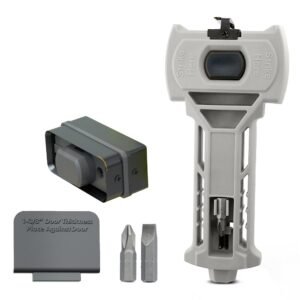
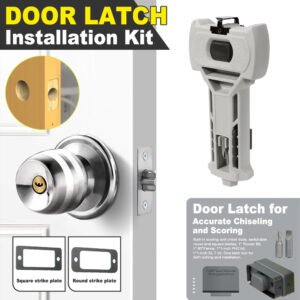
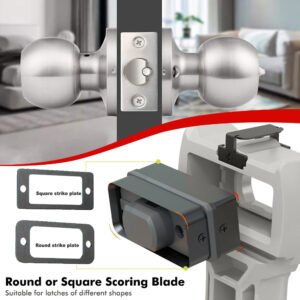
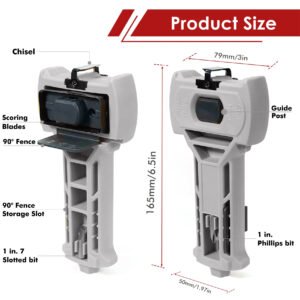
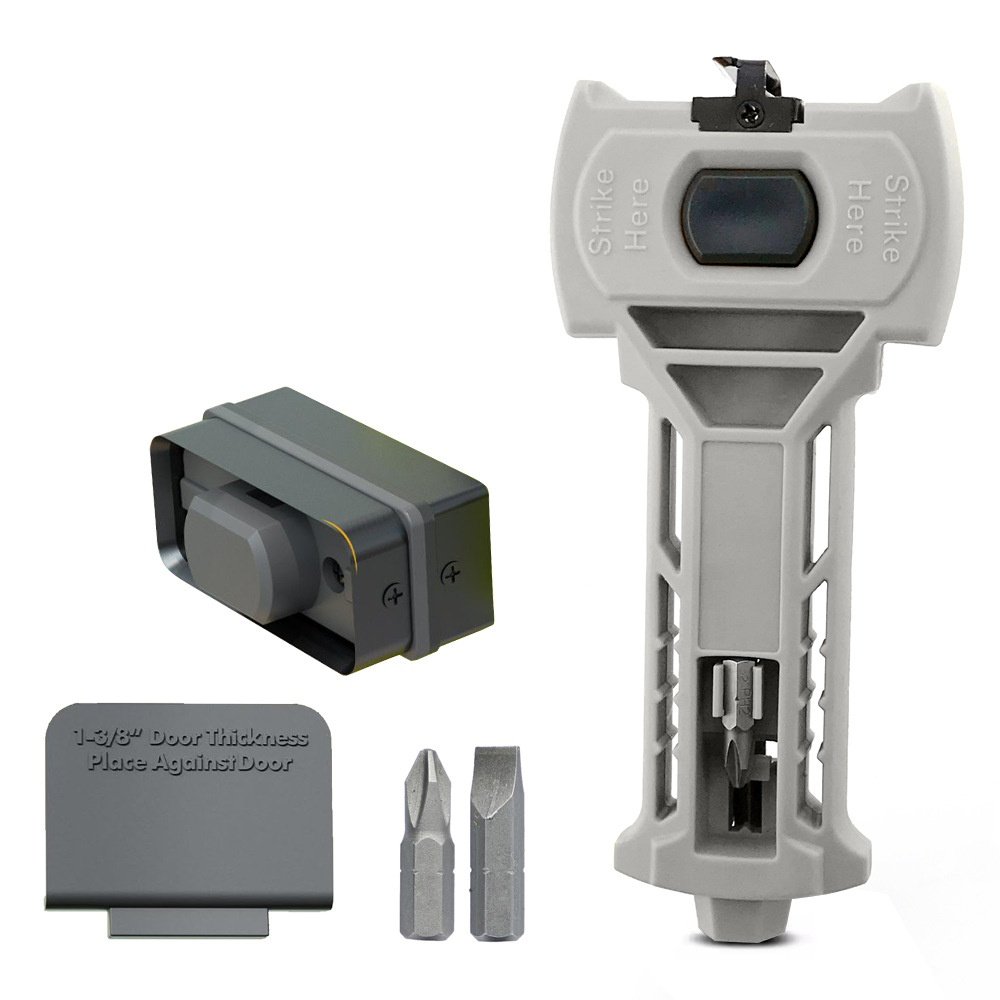
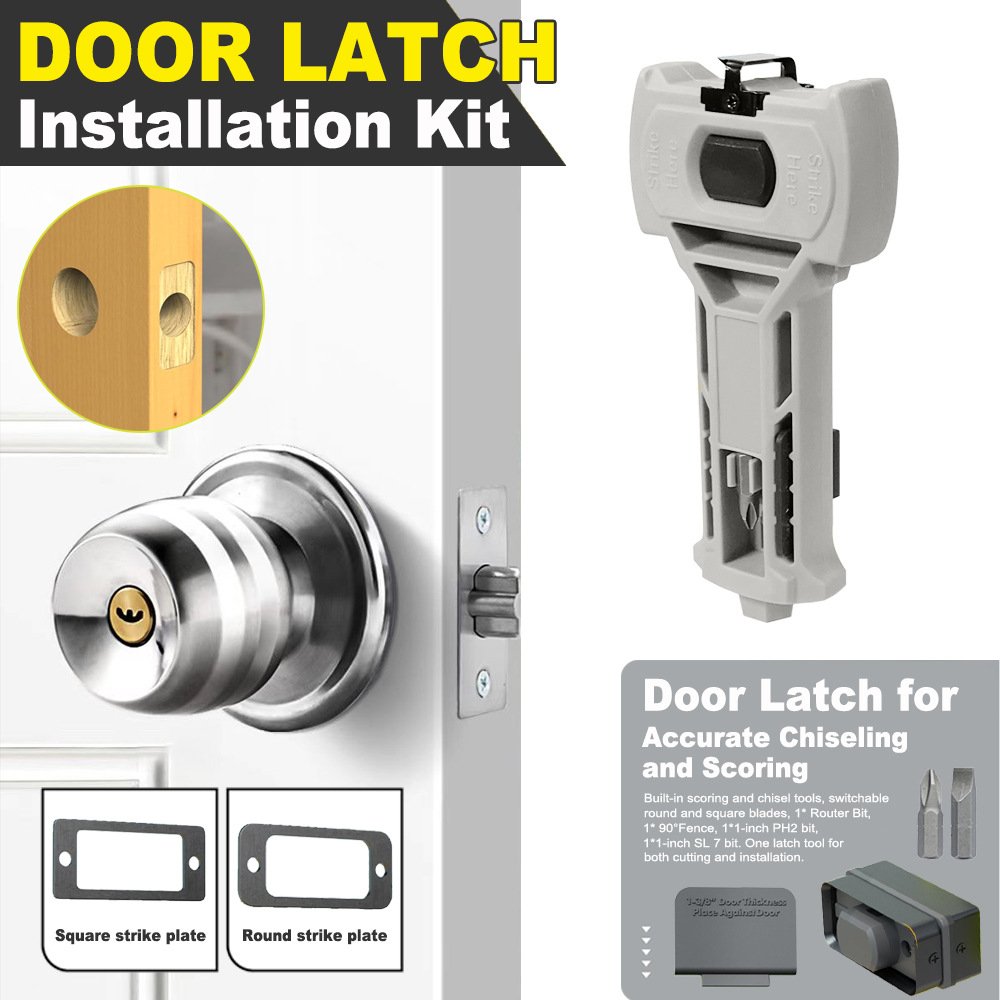
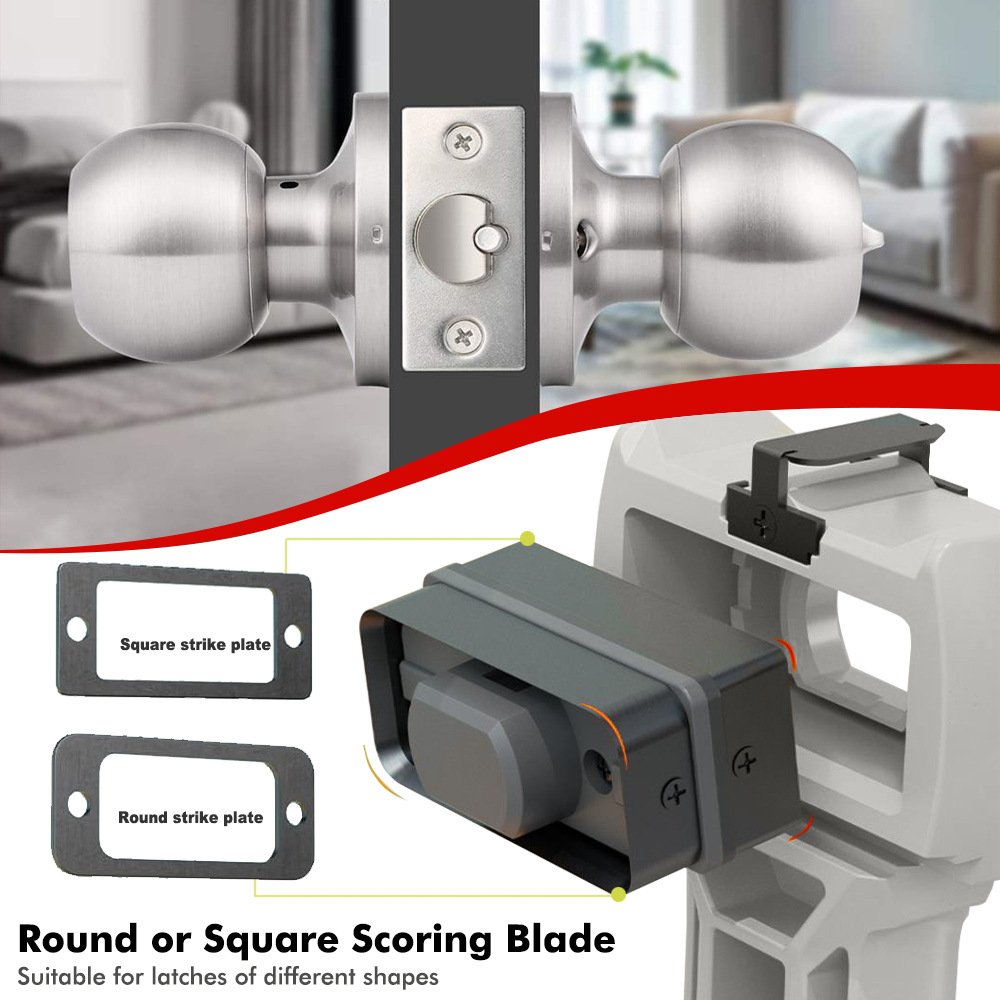
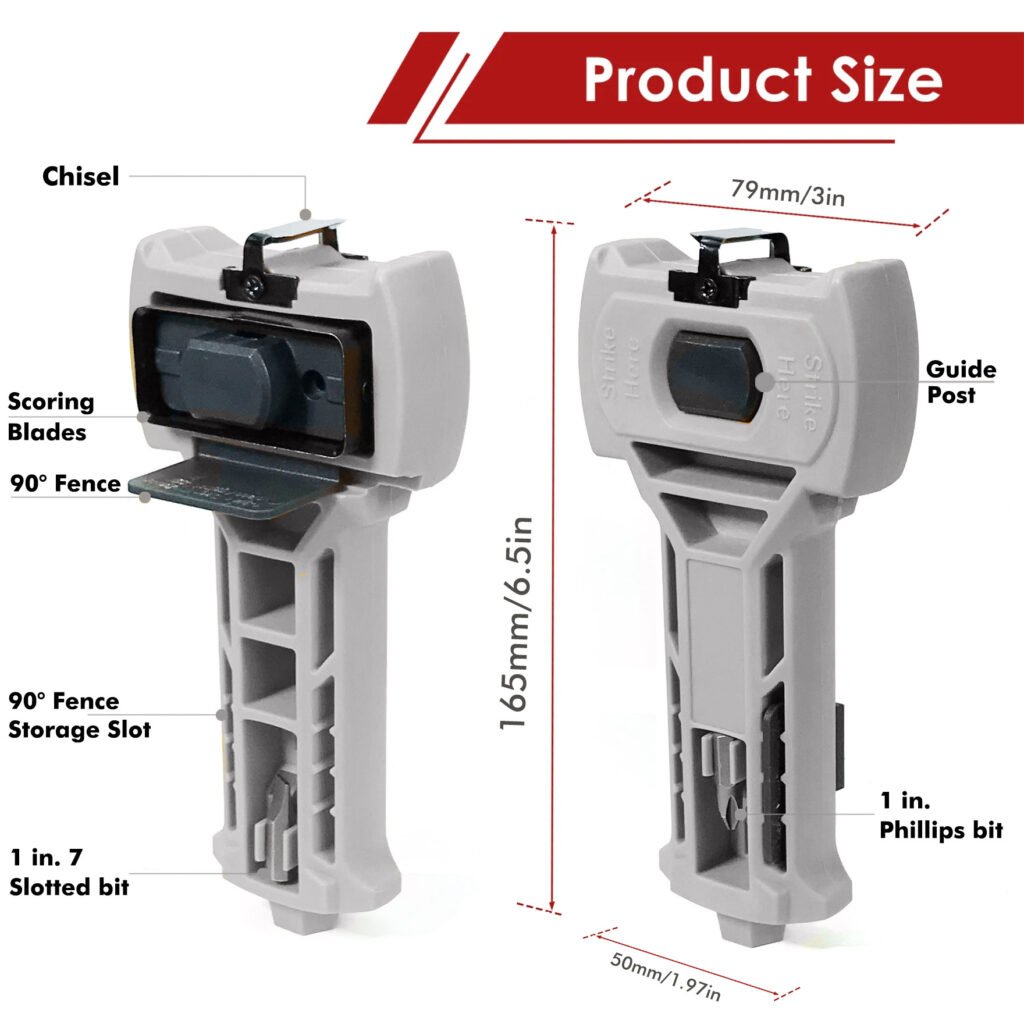
Premium Door Latch Mortise Strike Tool | Chisel-Free Lock Installation Kit | FixPartHub
-
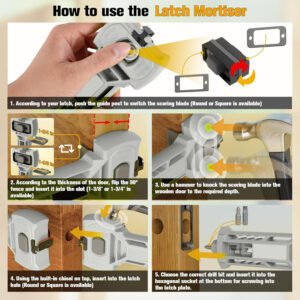
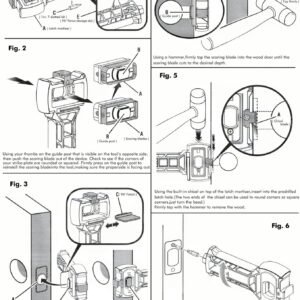
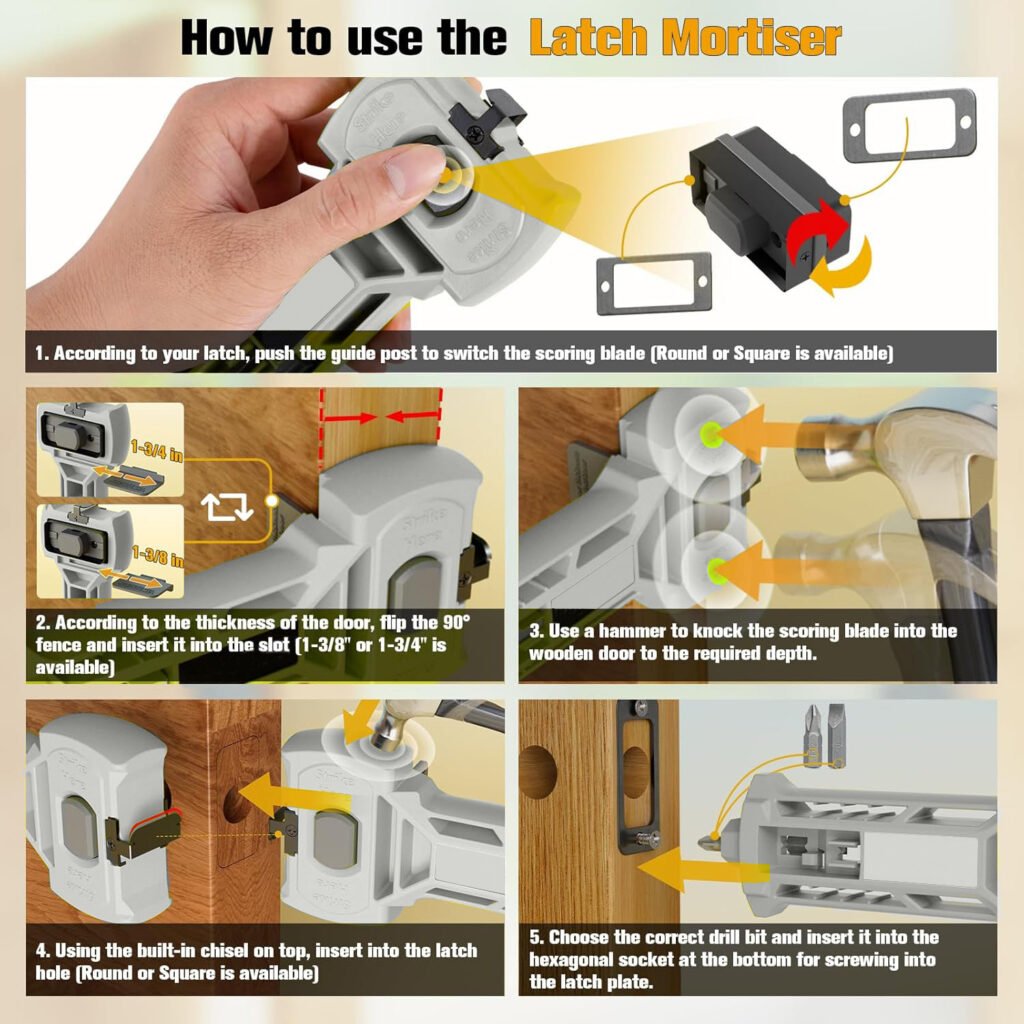
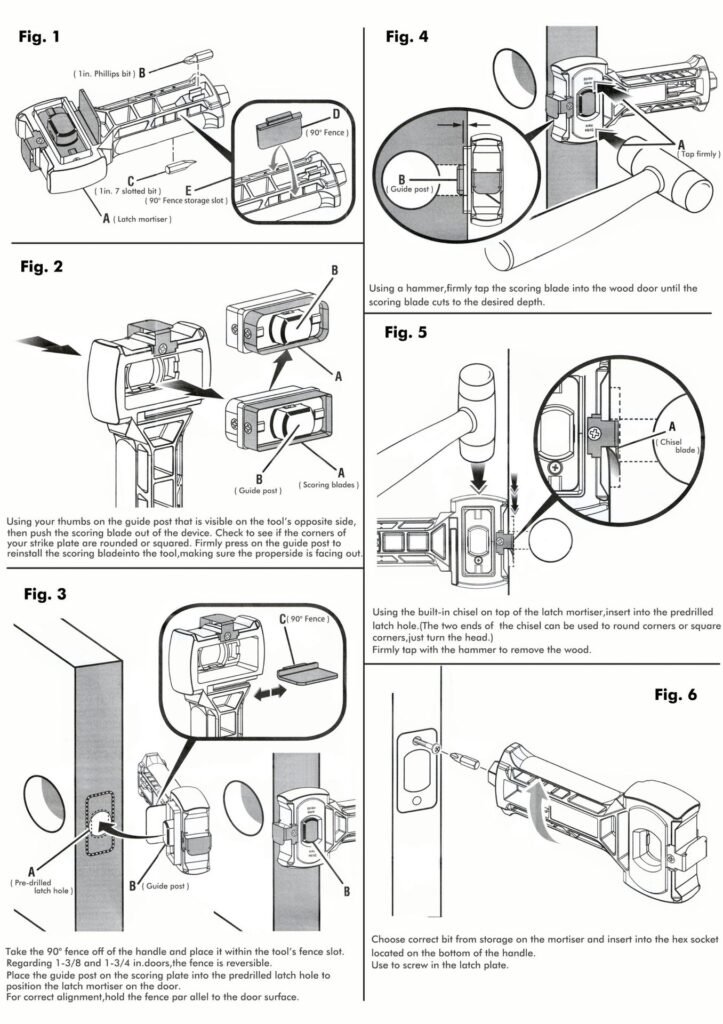
⚡ SECONDS PER INSTALLATION: Stop wasting time with hand chisels. This heavy-duty strike tool cuts a factory-perfect rectangular mortise for your door latch faceplate in just two quick mallet strikes.
-
🎯 AUTO-ALIGNING GUIDE: No measuring or marking required. Simply push the 1-inch cylindrical guide head into your pre-drilled latch hole, and the tool automatically squares perfectly with the door edge.
-
🪚 100% CHISEL-FREE: The first strike scores the exact outline of a standard latch plate; the second strike removes the inner wood to a precision pre-set depth. Say goodbye to crooked faceplates and binding locks.
-
🛡️ HEAVY-DUTY GREY EDITION: Engineered for professional job sites. Upgraded with a high-impact, thickened polymer housing to absorb repetitive mallet strikes, paired with hardened steel cutting blades that won’t dull quickly.
-
🚪 UNIVERSAL COMPATIBILITY: Designed to fit all standard residential interior and exterior doors (1-3/8″ to 1-3/4″ thick). Works flawlessly on solid wood, MDF, and composite doors.
| Buy More, Save More | Quantity | Discount |
|---|---|---|
| Bulk Discount | 2 | 5% |
| Bulk Discount | 3 – 5 | 10% |
| Bulk Discount | 6 – 19 | 15% |