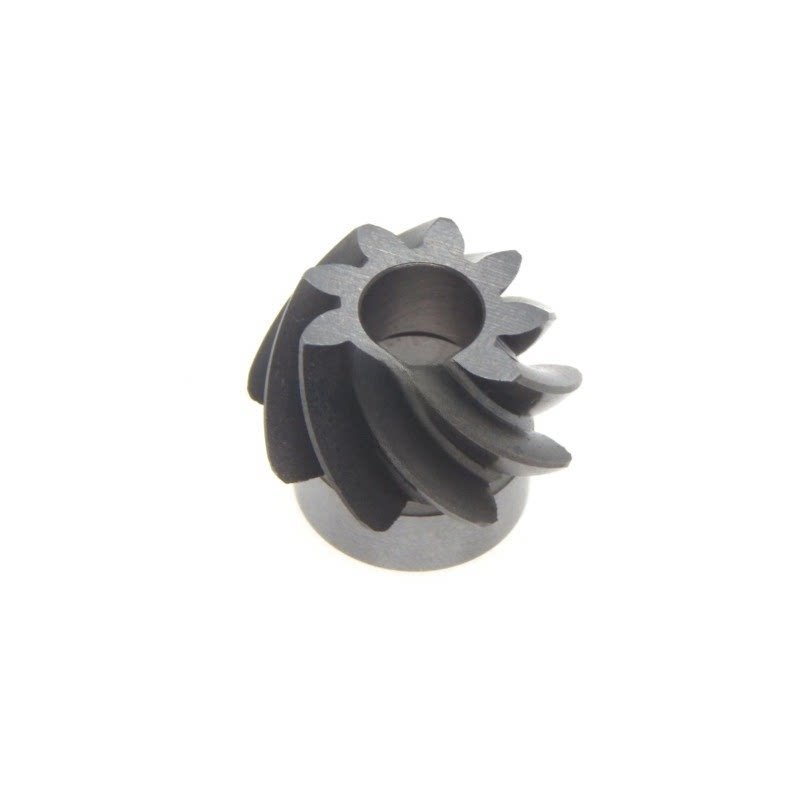
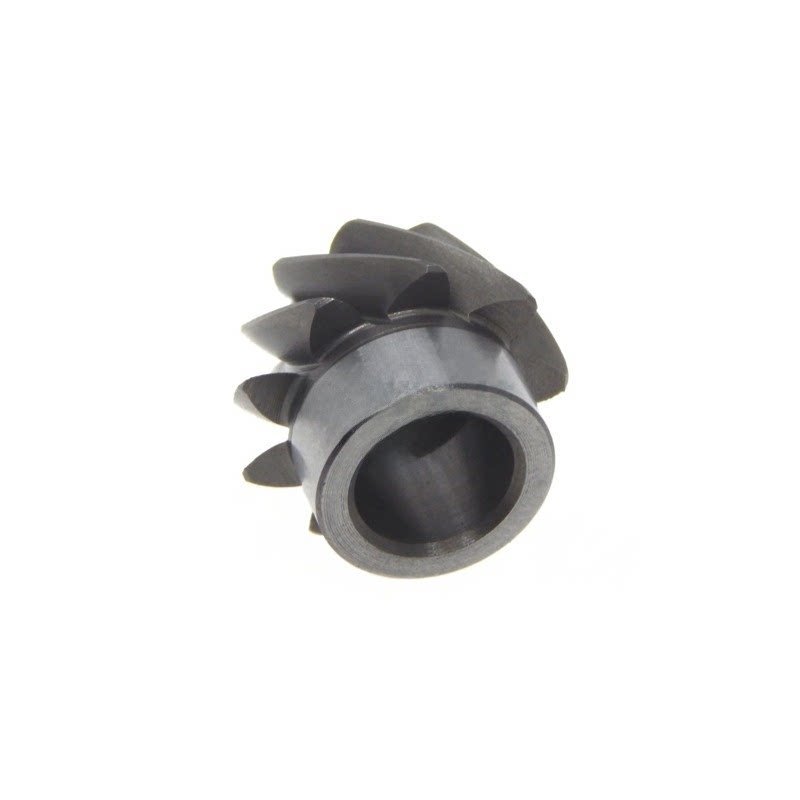
Product Overview
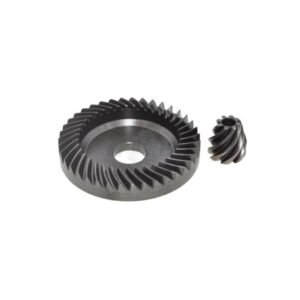
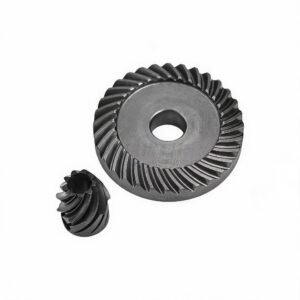
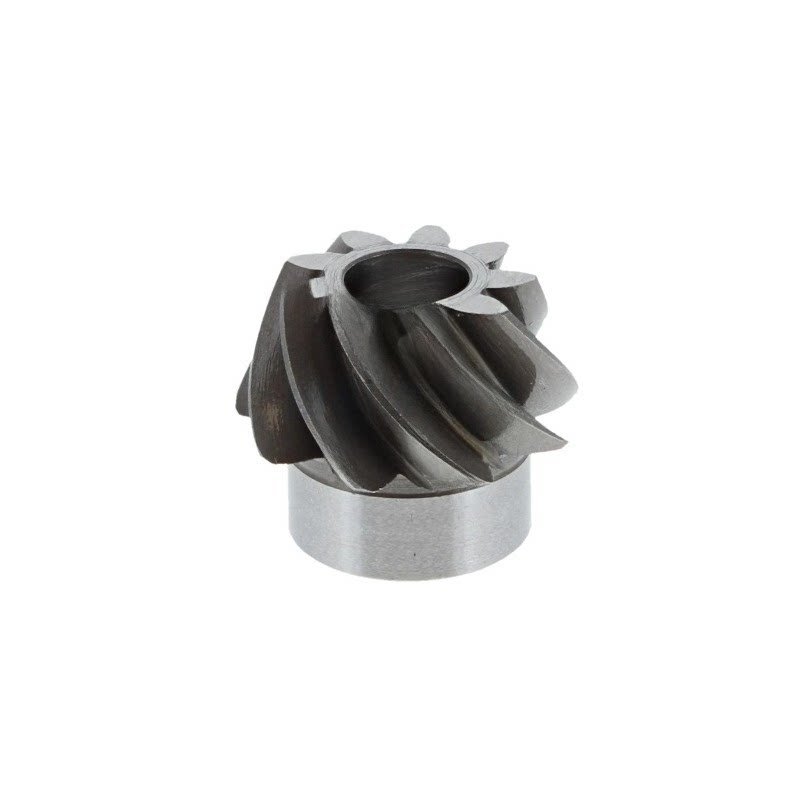
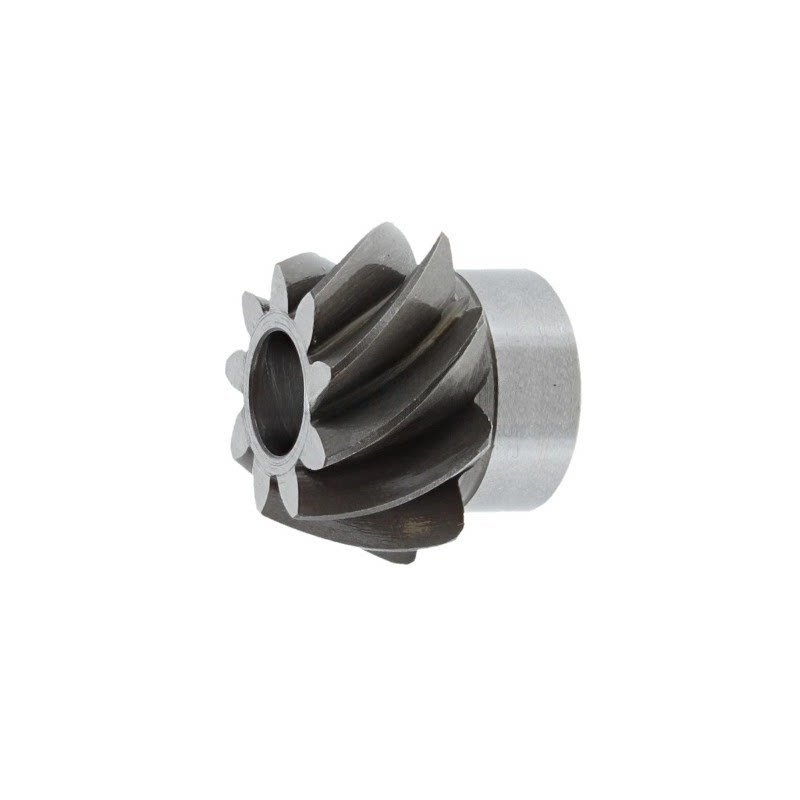
The 227A58-2 Spiral Bevel Pinion Gear is a precision-engineered direct-fit transmission replacement for 6″ (150mm) corded angle grinders and wall chasers built on this common platform. This pinion gear is the primary drive component that transfers torque from the motor armature to the main gear, which then drives the spindle.[reference:2]
Designed for professional repair technicians and equipment maintenance specialists, this gear restores factory-spec power transmission to tools exhibiting grinding stalling, loss of torque under load, excessive gear noise, or complete drive failure. The case-hardened alloy steel construction and precision-ground spiral bevel tooth profiles deliver the durability required for continuous heavy-duty grinding, cutting, wall chasing, and surface conditioning operations.
This pinion gear is referenced as item 006-1 in OEM parts diagrams for the 9566C platform and carries OEM part number 227A58-2.[reference:3] It is the direct replacement for the original equipment gear in 9566C, 9566CV, 9566PC, SG1250, SG1251, and related variants.
💡 Pro Tip – Pre-Installation Diagnostic: Before tearing into the gear case, perform a no-load amp draw test with a clamp meter. A healthy 6″ angle grinder should draw approximately 5-7A at no load. Draws exceeding 9A with the disc spinning freely indicate either failing gearbox bearings or a gear set with excessive tooth wear – both resolved by replacing the 227A58-2 pinion gear along with the corresponding main gear. Always disconnect the tool from mains power and allow the motor to cool before beginning disassembly.
Diagnostic & Fitment – When to Replace
Specification Comparison
| Specification | Worn / Generic Aftermarket | FixPartHub Precision Replacement ✅ |
|---|---|---|
| Tooth Hardness | Surface-hardened only – rapid wear | Case-carburized, through-hardened core |
| Tooth Profile Accuracy | Inconsistent – noise & vibration | Precision-ground spiral bevel – smooth meshing |
| Material Grade | Low-grade carbon steel | High-grade alloy steel – extended service life |
| Part Number Verification | Generic cross-reference – uncertain fit | 227A58-2 – active OEM specification[reference:4] |
| Pitting & Spalling Resistance | Prone to surface fatigue | Heat-treated – resists contact fatigue |
Teardown & Replacement Workflow
Compatibility – Cross-Reference & OEM Part Numbers
Diagnostic Q&A
❓ Q: My grinder runs but the disc doesn’t turn – is this definitely the pinion gear?
A: Not always. First verify that the spindle lock isn’t engaged and the disc isn’t seized. If the motor spins freely but the disc remains stationary, the gear set has likely stripped – either the pinion gear (227A58-2) or the main gear has failed. Remove the gear case and inspect both gears – any missing teeth or excessive wear confirms the need for replacement.
❓ Q: What is the correct part number for this pinion gear – is it 227A58-2?
A: Yes. 227A58-2 is the OEM part number for the spiral bevel pinion gear used in 9566C, 9566CV, 9566PC, SG1250, and SG1251 platforms. It is referenced as item 006-1 in OEM parts diagrams.[reference:5] This listing supplies the current-spec 227A58-2 pinion gear, which is the direct replacement for all compatible models.
❓ Q: What grease should I use when reinstalling the pinion gear?
A: Use a high-temperature, lithium-based or synthetic EP (extreme pressure) grease rated for gear applications – NLGI Grade 2 with molybdenum disulfide or similar anti-wear additives. Apply approximately 10-15g evenly across the pinion gear teeth and bearing surfaces. Avoid over-greasing, which can cause overheating and premature seal failure.
❓ Q: Will this pinion gear fit my SG1250 wall chaser?
A: Yes. The 227A58-2 pinion gear is compatible with SG1250 and SG1251 wall chasers, as well as 9566C, 9566CV, and 9566PC angle grinders. The gear case and transmission components are shared across these platforms. Always verify your tool’s model number against the compatibility list before ordering.
Safety Notes
- 🔴 Always disconnect the tool from mains power before beginning any disassembly or gear replacement procedure.
- ⚡ Allow the tool to cool completely before handling internal components – gears and gear case can reach high temperatures during operation.
- 🔧 Use correct torque values – gear case screws typically require 2.0-2.5 Nm (18-22 in-lbs). Over-torquing can strip housing threads or distort the gear case alignment.
- 🧤 Wear cut-resistant gloves when handling gears – machined tooth surfaces can have sharp edges.
- 📐 Verify gear mesh before final assembly – the gears should rotate smoothly with no binding or tight spots.
- ✅ Perform a no-load test before reinstalling the disc and guard – verify smooth operation and correct rotation direction.
A: Perform a “stall test” under load. With a fresh grinding disc installed, apply moderate pressure to a scrap piece of metal. If the grinder bogs down significantly or the disc stops rotating while the motor continues to run, the gear set is slipping – indicating worn teeth on the pinion gear (227A58-2) or the main gear. Additionally, listen for a high-pitched whine or grinding noise during free spinning – this indicates excessive tooth wear or pitting.
A: This pinion gear is compatible with 9566C, 9566CV, 9566PC, 9566PCV, SG1250, SG1251, and related 6″ angle grinder and wall chaser variants. Always verify your tool’s model number against the compatibility list before ordering.
A: Always inspect both gears. If the pinion gear (227A58-2) shows signs of wear, the main gear has likely experienced similar wear. Gears wear together and develop a specific tooth contact pattern. While you can replace just the pinion, it is strongly recommended to replace both gears as a matched set to ensure proper mesh and prevent premature failure of the new component.
A: 227A58-2 is the OEM specification for this pinion gear, manufactured to original equipment tolerances with case-hardened alloy steel and precision-ground spiral bevel tooth profiles. Generic aftermarket gears often use lower-grade materials with inconsistent tooth geometry – resulting in increased noise, vibration, and accelerated wear.