
Freehand sharpening is a great parlor trick, but in a production woodworking shop, it is an unpredictable waste of time. Relying on human biomechanics to hold a blade perfectly steady at a precise angle across a wet stone is a massive mechanical liability. To achieve a scary-sharp, geometrically perfect cutting edge that shears end-grain like butter, you must remove your wrists from the equation. The industry standard for repeatable, dead-flat bevels is mechanical locking using a Premium Aluminum Honing Guide Sharpening Jig.
Freehand vs. Mechanical: The Geometry Evaluation
Let us evaluate the physical reality of why freehand sharpening destroys your tool geometry and how a mechanical jig solves the problem instantly.
| Sharpening Method | Bevel Geometry | Angle Repeatability | Material Removal Rate |
|---|---|---|---|
| Freehand Locking | Highly convex. Natural arm movement rocks the blade. | Poor. Requires total regrinding if you miss the angle. | High waste due to constant angle corrections. |
| Cheap Plastic Guides | Uneven. Plastic chassis flexes under downward pressure. | Fair, but jaws often slip during heavy stroking. | Moderate. |
| Aluminum Honing Guide | Flawless flat grind. Zero vertical deflection. | Perfect. You hit the exact same micro-bevel every time. | Minimal. You only remove the exact steel required. |
Scenario Selection: Adapting to Your Tool Roll
A premium honing jig is designed with multi-tier clamping jaws to accommodate the extreme variations in your hand tool arsenal.
🪓 Narrow Bench Chisels
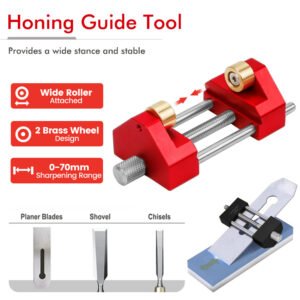
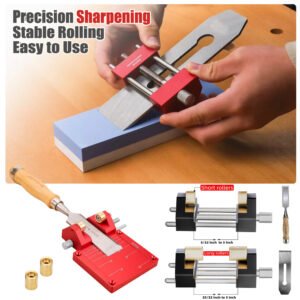
Sharpening a 1/4-inch mortise chisel by hand is nearly impossible; the narrow footprint causes the blade to tip sideways instantly. The jig clamps the chisel low in the v-grooves, utilizing the wide brass roller to provide a massive, stable footprint that prevents any lateral rocking.
⚙️ Wide Hand Plane Irons
If a smoothing plane iron is sharpened out of square, your plane will cut thick shavings on one side and nothing on the other. The upper clamping jaws grip wide irons perfectly parallel to the roller, guaranteeing the cutting edge remains 100 percent perpendicular to the sides of the blade.
🔬 Micro-Bevel Execution
To save time, you only need to sharpen the very tip of the blade. Set the jig to 25 degrees for the primary bevel, then simply tap the blade back 1/16 of an inch into the jig to instantly create a razor-sharp 30-degree micro-bevel in just three strokes.
Post-Purchase Maintenance: Keeping Your Jig Dialed
A precision machining tool requires basic workshop maintenance to survive the grit and slurry of the sharpening station.
- Flush the Roller Axle: The abrasive slurry generated by waterstones and diamond plates acts like liquid sandpaper. If it dries inside the brass roller mechanism, it will grind the axle down. Rinse the roller thoroughly under running water immediately after use.
- Lubricate the Threads: Apply a single drop of 3-in-One oil or light machine oil to the main clamping screw threads and the roller axle once a month to prevent binding and ensure maximum clamping torque.
- Clean the Clamping Grooves: Inspect the inner v-grooves of the jaws before inserting a chisel. A single trapped metal filing will kick your blade slightly out of square, ruining the geometry of your freshly sharpened edge.
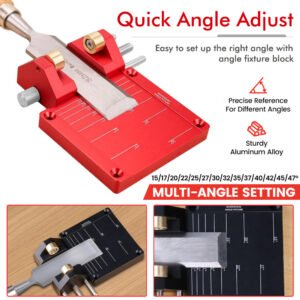
The distance varies slightly depending on the specific geometry of your tools, but the standard baseline for this type of jig is typically a 50mm projection for a 25-degree angle on the upper jaws (plane irons), and a 40mm projection for a 25-degree angle on the lower jaws (chisels). Always verify with a protractor during your first setup, then build a wooden stop-block.
No. Brass is significantly softer than both the hardened steel of your tools and the monocrystalline diamonds on your sharpening plates. The roller is designed to glide smoothly over the surface without dislodging the abrasive substrate.
This specific honing guide is engineered strictly for straight, flat-edged tools like standard bench chisels, mortise chisels, and hand plane irons. Skewed chisels and curved carving gouges require freehand sharpening or highly specialized articulating jigs.
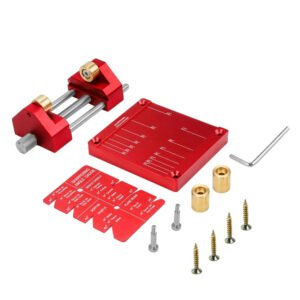
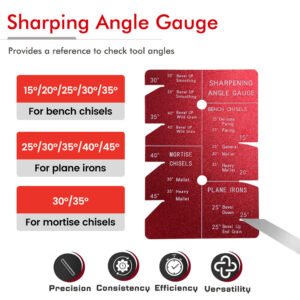
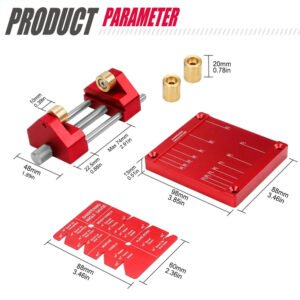
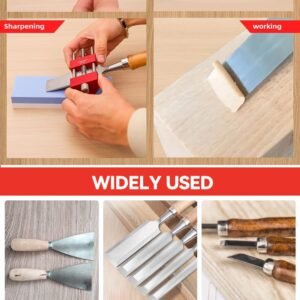
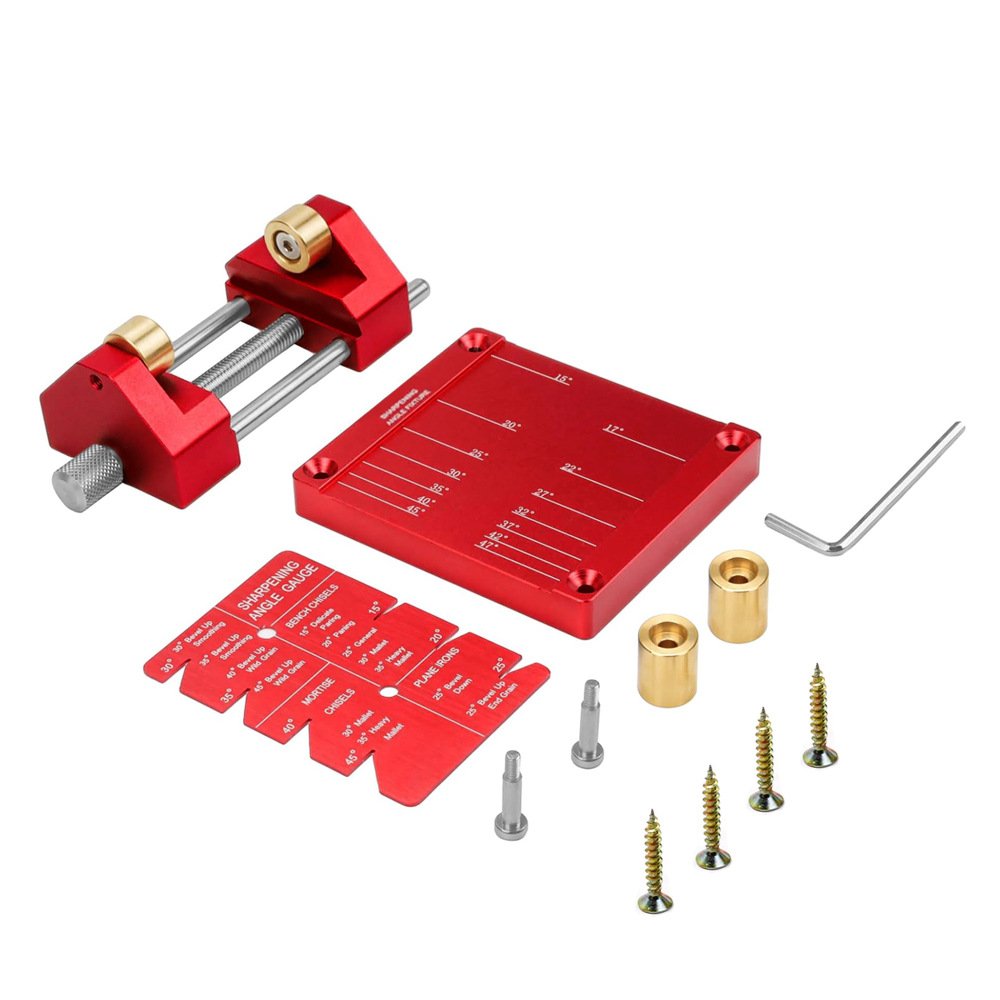
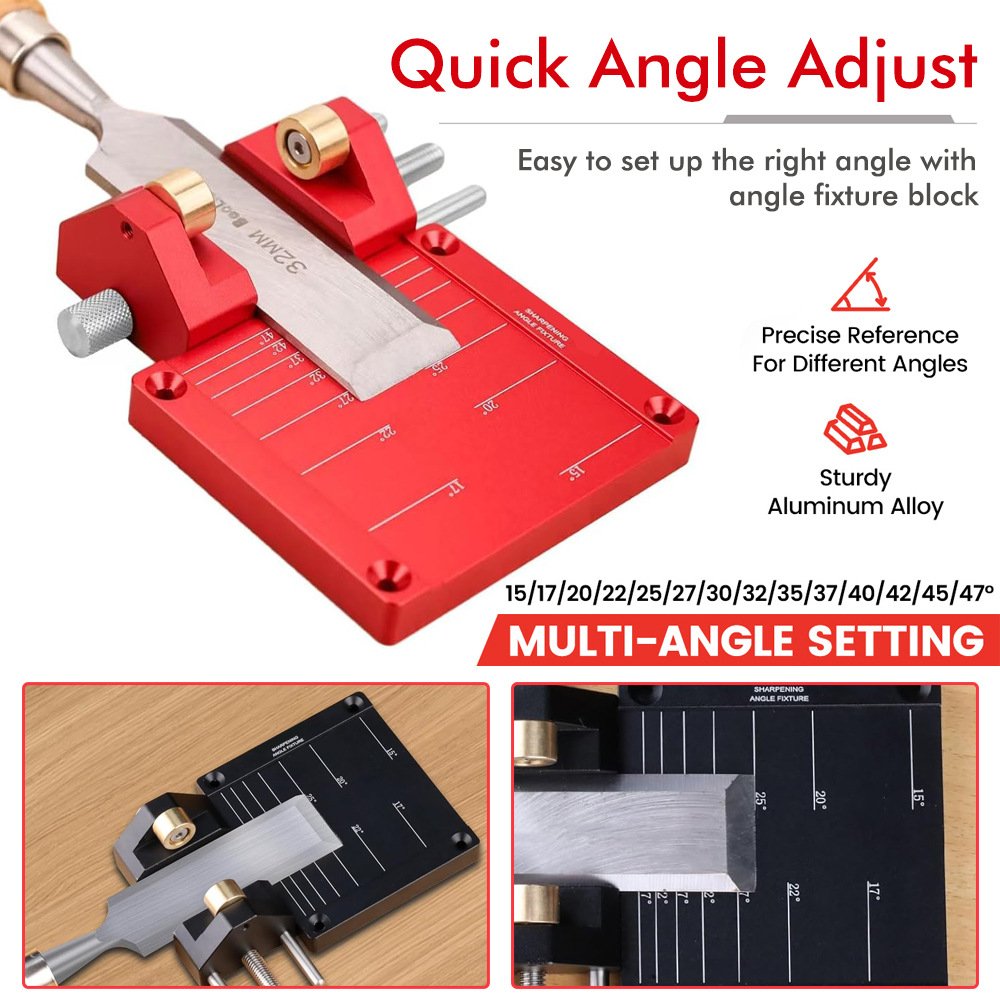
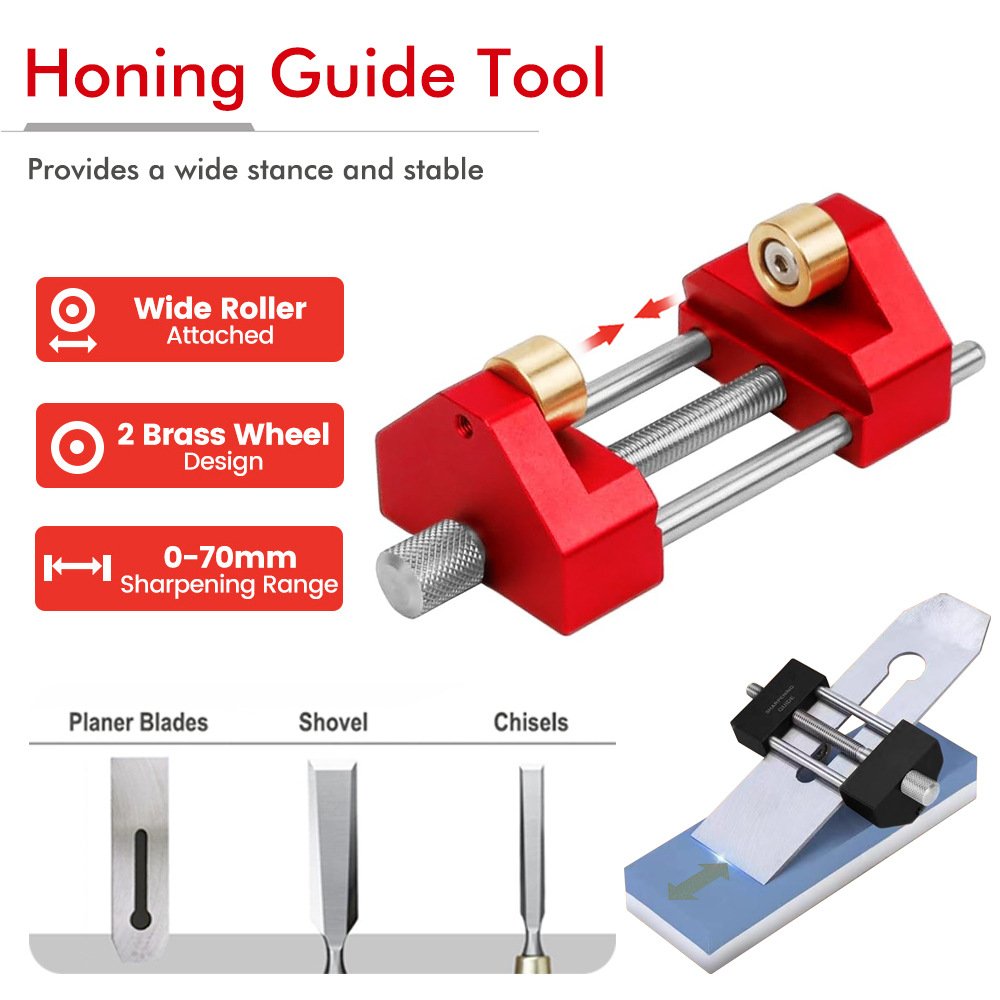
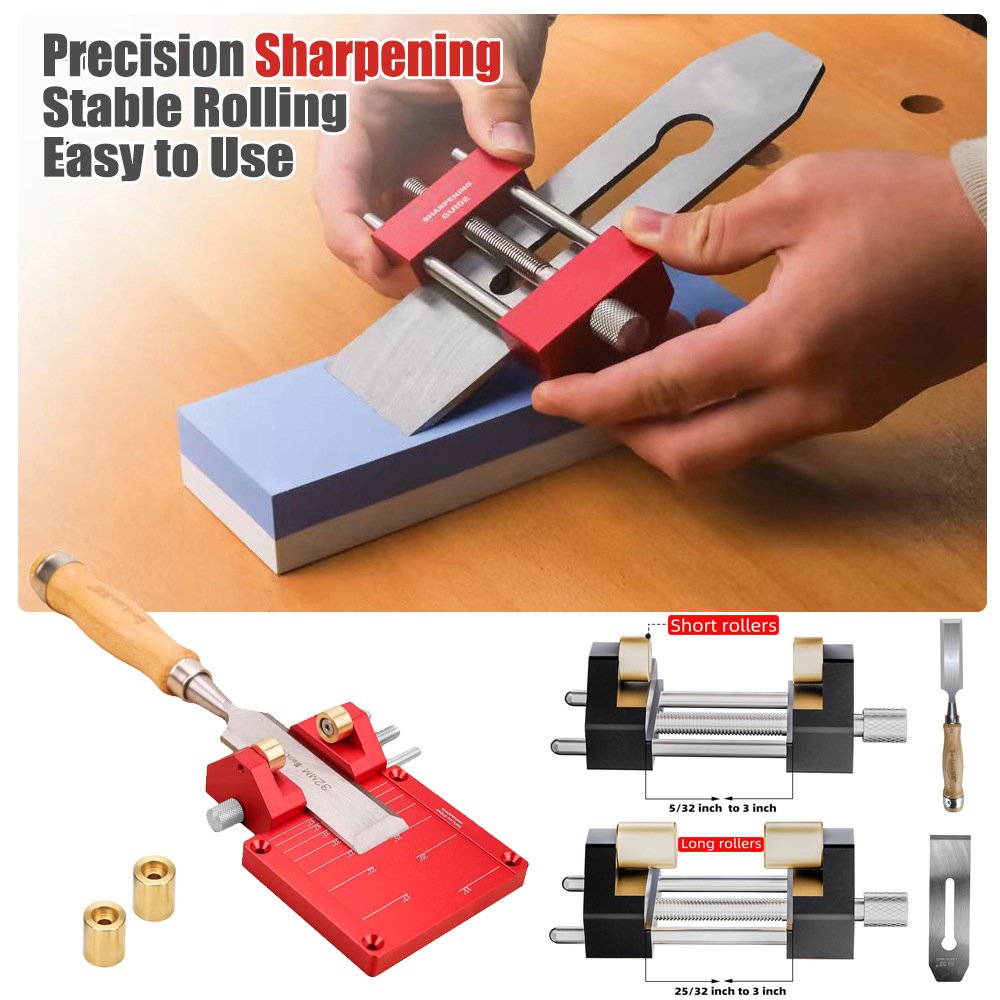
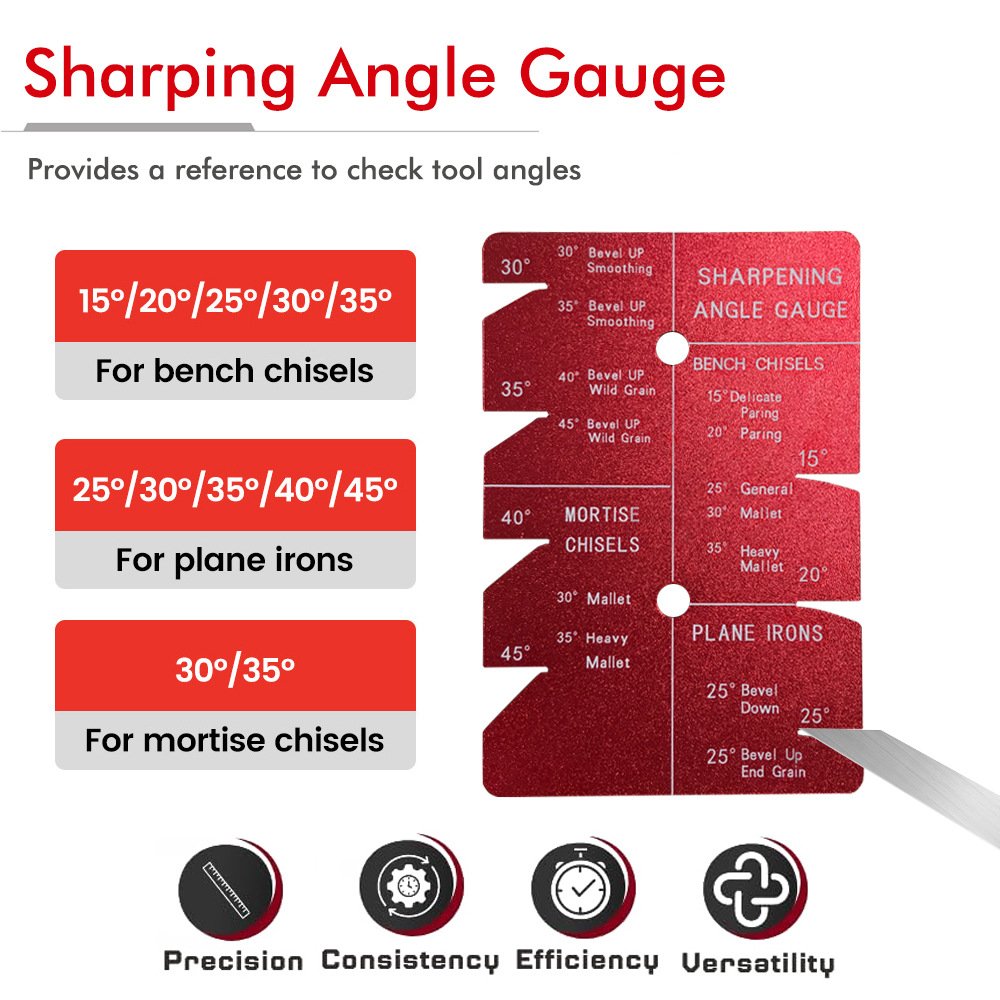
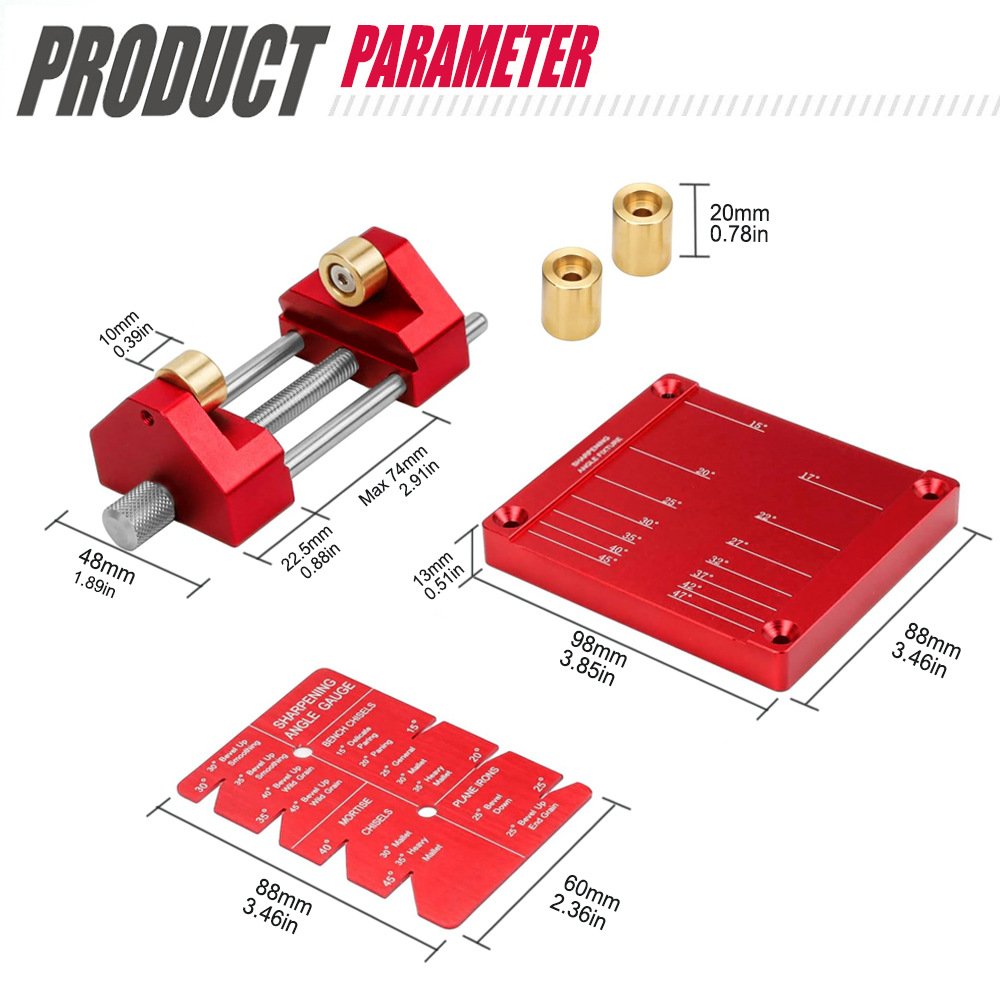
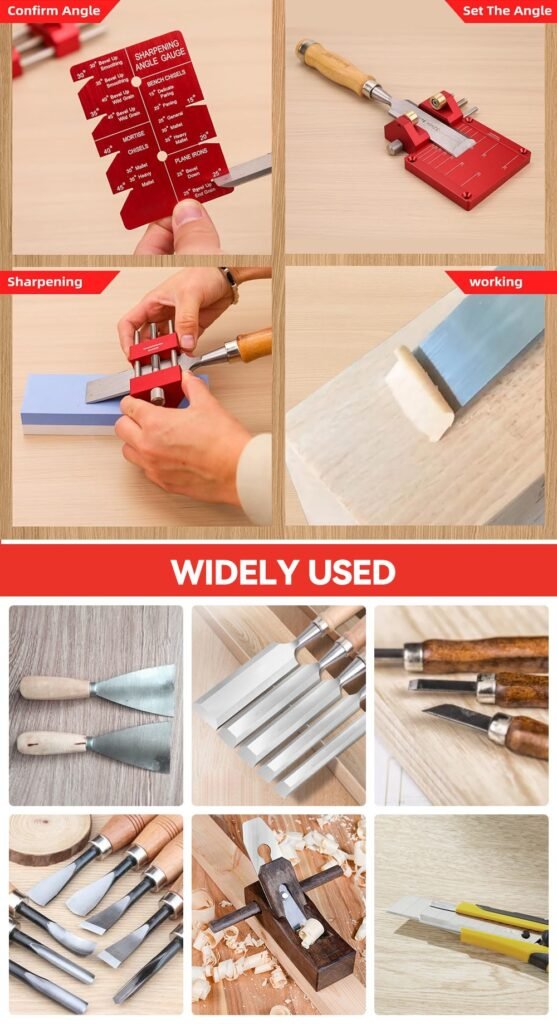
Premium Solid Aluminum Honing Guide | Chisel & Plane Iron Sharpening Jig | FixPartHub
- ⚖️ MASSIVE 660G STABILITY: Stop ruining your edges with flimsy 150g jigs. Machined from solid aerospace-grade aluminum, this heavy-duty 660g (1.45 lbs) guide locks your tools dead-square, eliminating the wobbles that cause rounded bevels.
- 📐 FLAWLESS MICRO-BEVELS: The precision dual-jaw clamping mechanism securely holds everything from narrow Japanese chisels to massive 3-inch plane irons. Lock in your perfect 25° or 30° angle and replicate it flawlessly every time.
- 🌊 WIDE ROLLER PROTECTION: Unlike cheap jigs with narrow wheels that dig trenches into your expensive water stones, our wide-stance roller distributes weight evenly, gliding smoothly across both soft stones and diamond plates.
- 🛡️ 100% RUST-PROOF BUILD: Sharpening is a wet process. We eliminated cheap iron parts. This entire assembly is crafted from anodized aluminum alloy and stainless steel hardware to guarantee a lifetime of rust-free operation.
- 🪚 THE ULTIMATE EDGE PREP: Don’t let dull tools tear your wood fibers. This premium honing guide ensures your chisels and plane irons achieve a razor-sharp, mirror-polished edge, dramatically improving your woodworking results.
| Buy More, Save More | Quantity | Discount |
|---|---|---|
| Bulk Discount | 2 | 5% |
| Bulk Discount | 3 – 5 | 10% |
| Bulk Discount | 6 – 19 | 15% |