
Cabinetry hardware operates on zero-tolerance geometry. A 35mm concealed hinge requires a perfectly perpendicular, flat-bottomed mortise that matches the exact Z-axis depth of the steel cup. If the bore is skewed by a single degree, the multi-link hinge geometry will fail, causing the cabinet door to bind against the face frame. Freehanding this bore, or using unguided plastic templates, is a structural liability. To guarantee dead-center, factory-grade mortises, you must eliminate bit wander by locking the drive shaft inside a 35mm Triple Bearing Concealed Hinge Jig.
Diagnostic Data: Lateral Runout vs. Triple Bearing Stabilization
Let us evaluate the machining data and look at why standard plastic guides melt and fail under heavy radial loads.
| Machining Parameter | Plastic Bushing / Freehand | Triple Bearing CNC Jig |
|---|---|---|
| Spindle Runout (Deflection) | Critical (+/- 1.5mm). Bit wanders upon laminate contact. | ✅ Zero. Shaft is trapped by three sealed ball bearings. |
| Thermal Friction | High. Steel shaft melts the plastic guide chassis at 1500 RPM. | ✅ Minimal. Bearings isolate RPM friction from the jig body. |
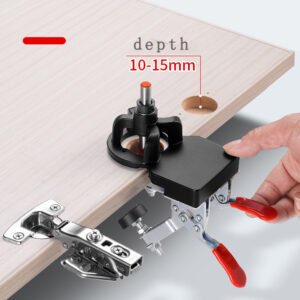
| Z-Axis Depth Control | Manual stops slip, risking veneer punch-through. | ✅ Mechanical hard-stop collar guarantees exact cup depth. |
Teardown & Machining Workflow: Calibrating the 35mm Mortise
Deploying this jig requires sequential calibration to ensure the backset matches your specific OEM hinge specifications.
Offset Calibration
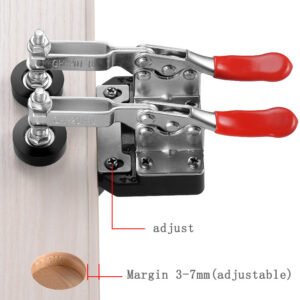
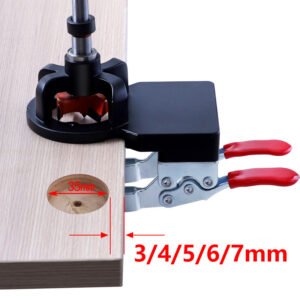
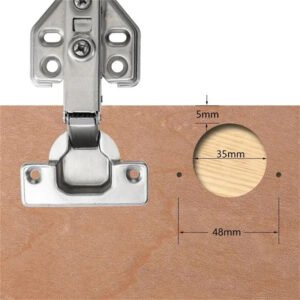
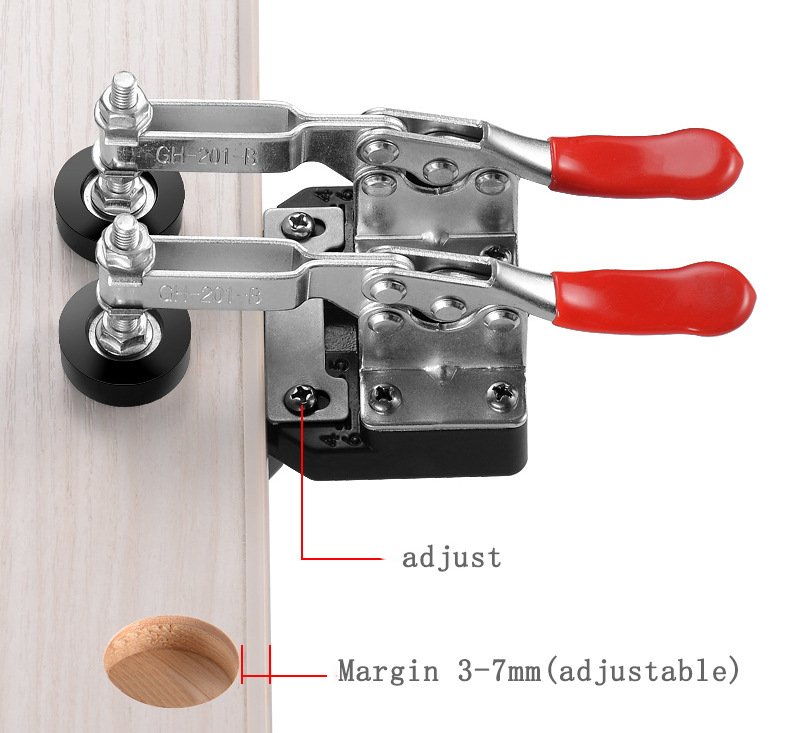
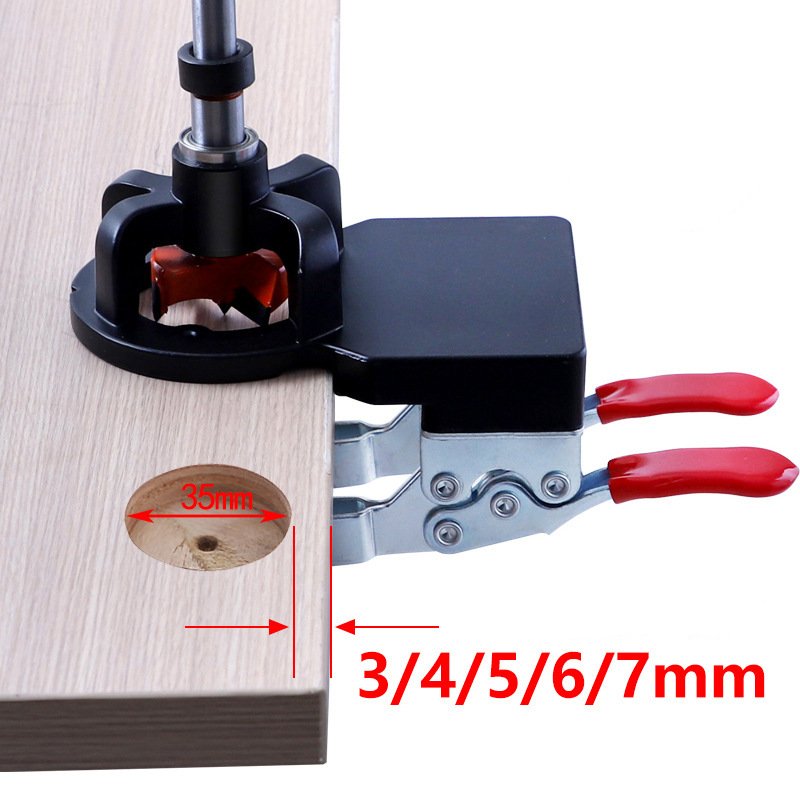
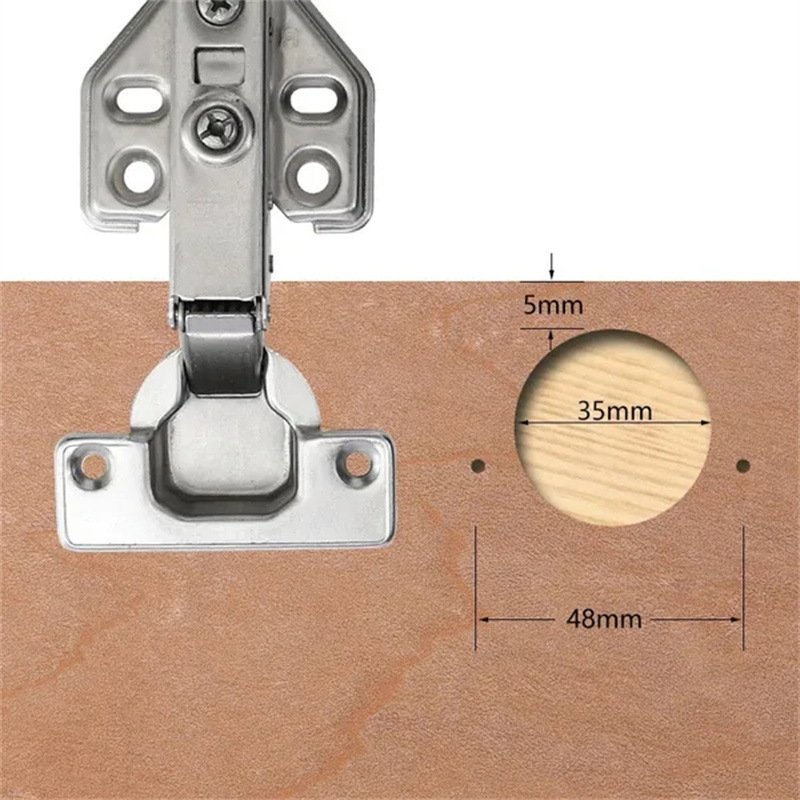
Standard Euro hinges require a specific cup offset (typically 3mm, 4mm, 5mm, or 6mm from the edge). Rotate the adjustable backset cams on the jig to match your hardware specs before clamping.
Chassis Lockdown
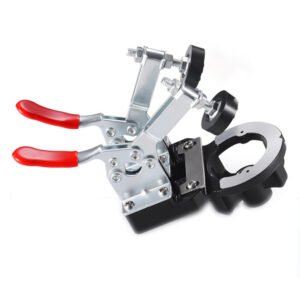
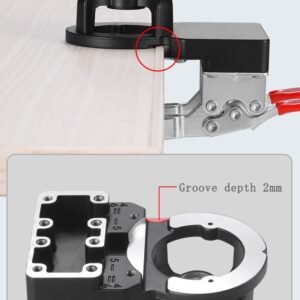
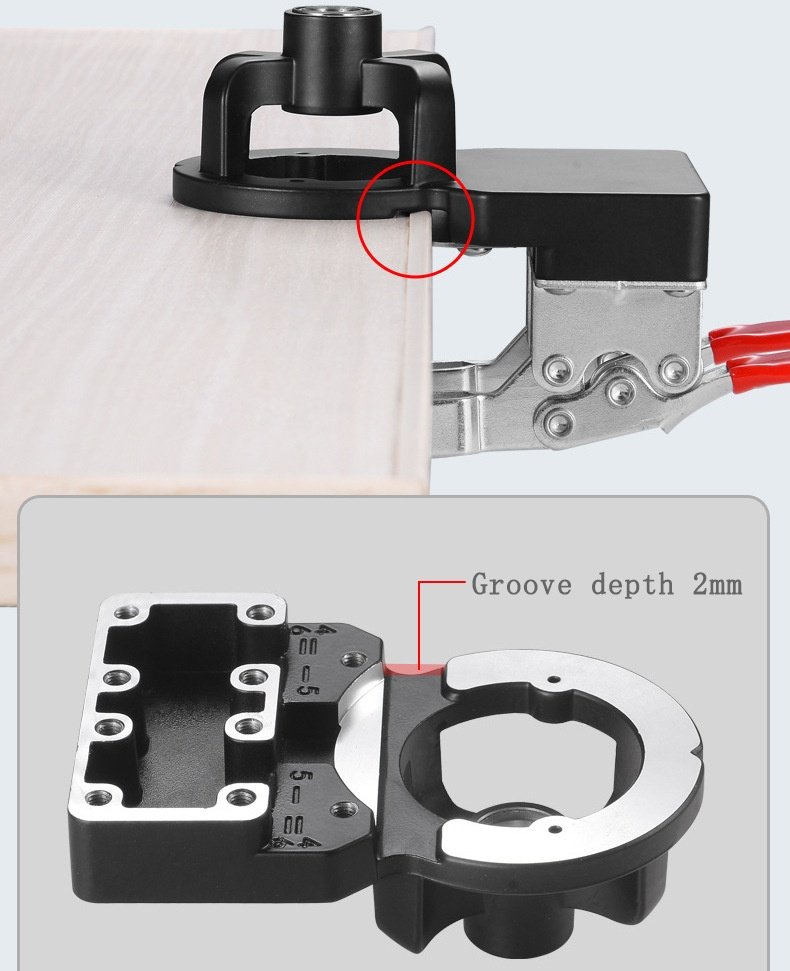
Position the jig against the stile edge and engage the integrated toggle clamp. The aluminum body must sit dead-flat against the door face to guarantee a 90-degree plunge angle.
Bearing Plunge
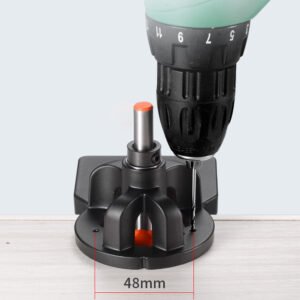
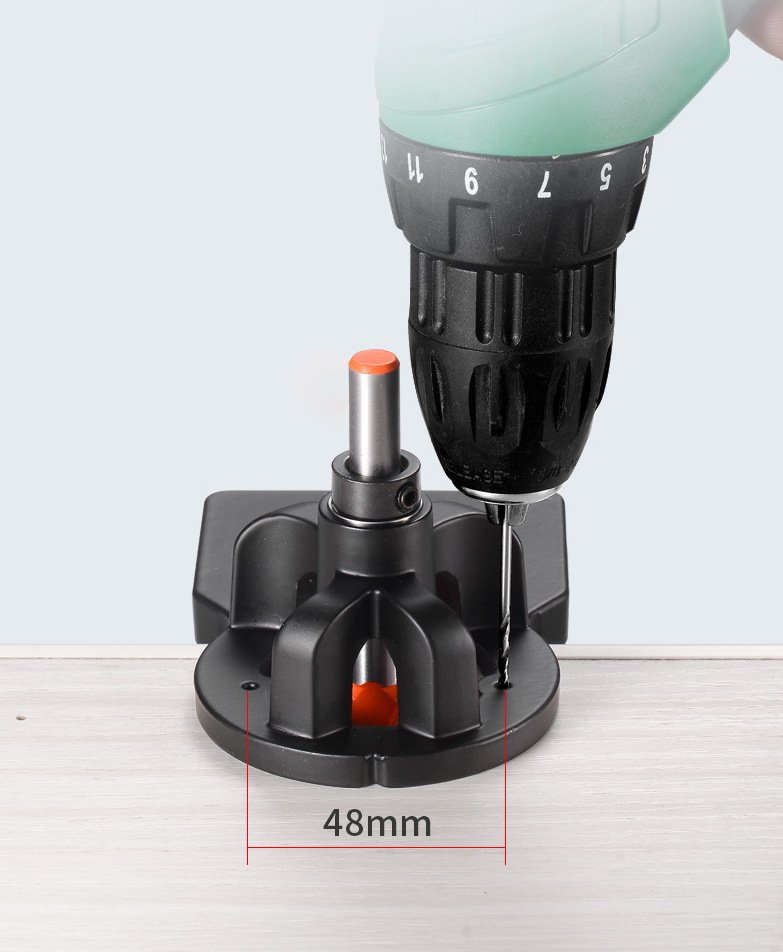
Insert the 35mm Forstner bit shaft into the triple bearing housing. Chuck your universal compatible drill, spool up to maximum RPM, and apply steady downward pressure until the depth collar bottoms out.
Extraction & Pilot Holes
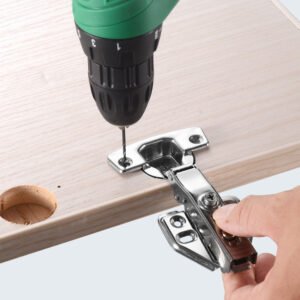
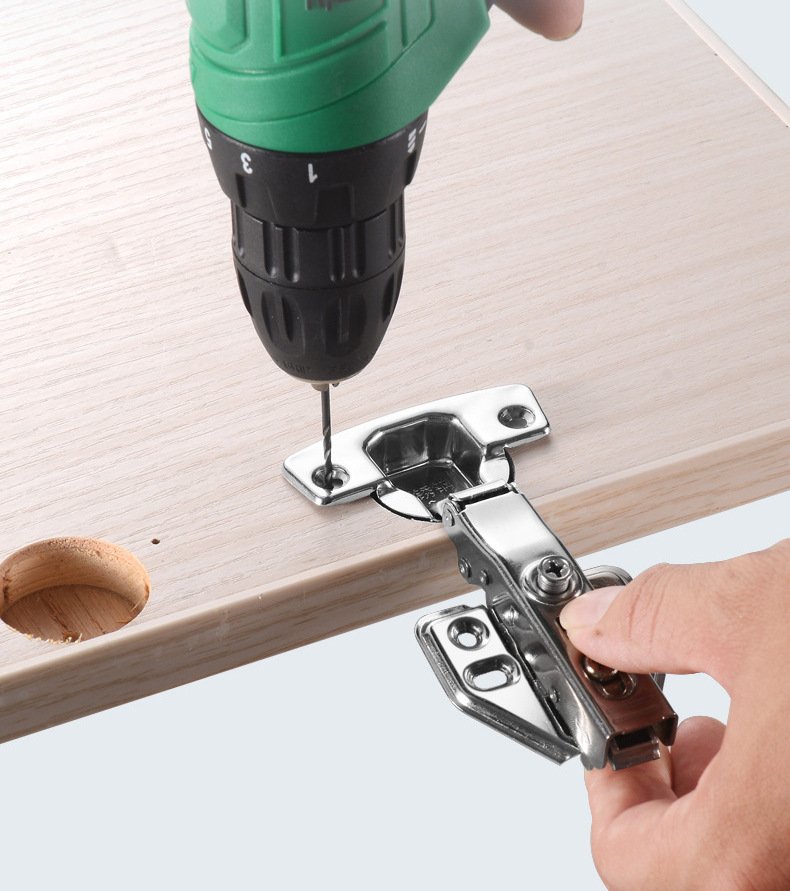
Extract the bit while it is still spinning to clear packed sawdust. Use the secondary 2mm guide bushings on the jig to drill perfectly aligned pilot holes for the hinge mounting screws.
Reassembly & Calibration: Hardware Torque
- Pilot Hole Enforcement: Never drive hinge mounting screws directly into MDF or particleboard without drilling pilot holes. The sheer volume of the screw threads will displace the core material, causing it to swell upward and push the hinge cup out of its flush alignment.
- Torque Limits: Do not use an impact driver to seat hinge plate screws. The aggressive torque will strip the wood fibers instantly. Seat the screws manually with a hand driver.
- Bearing Maintenance: After batching out doors, blow compressed air through the triple bearing block to remove fine MDF dust. Apply a dry PTFE spray lubricant to the bearing shields; never use wet oil, as it will attract and pack sawdust into the ball races.
Burning is caused by a feed rate that is too slow combined with a dull carbide bit, or failure to clear the chips. As the bit spins inside the bore, trapped sawdust creates extreme friction. Pulse the drill up and down slightly during the cut to allow the chips to evacuate from the mortise.
The jig features adjustable offset cams or indexing pins. Standard Euro hinges require a 3mm, 4mm, 5mm, or 6mm offset from the edge of the door to the edge of the 35mm hole. Check your specific hinge manufacturer’s technical spec sheet and rotate the jig’s cams to match that precise distance before clamping.
Yes. Precision CNC jigs utilize standard sealed ball bearings. If a bearing seizes due to resin buildup, remove the internal retaining snap ring, press the dead bearing out of the aluminum chassis, and press a standard replacement bearing in.
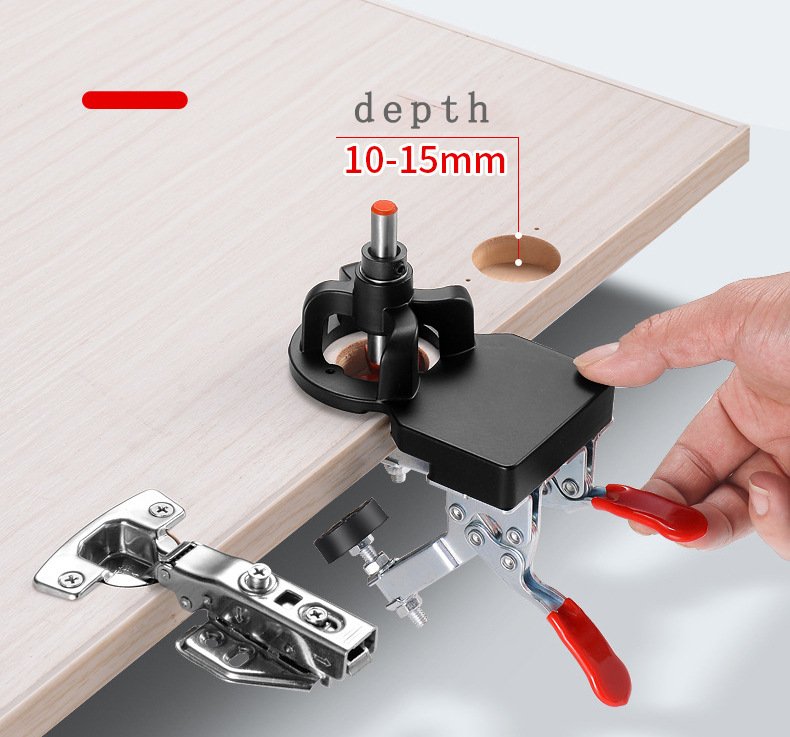
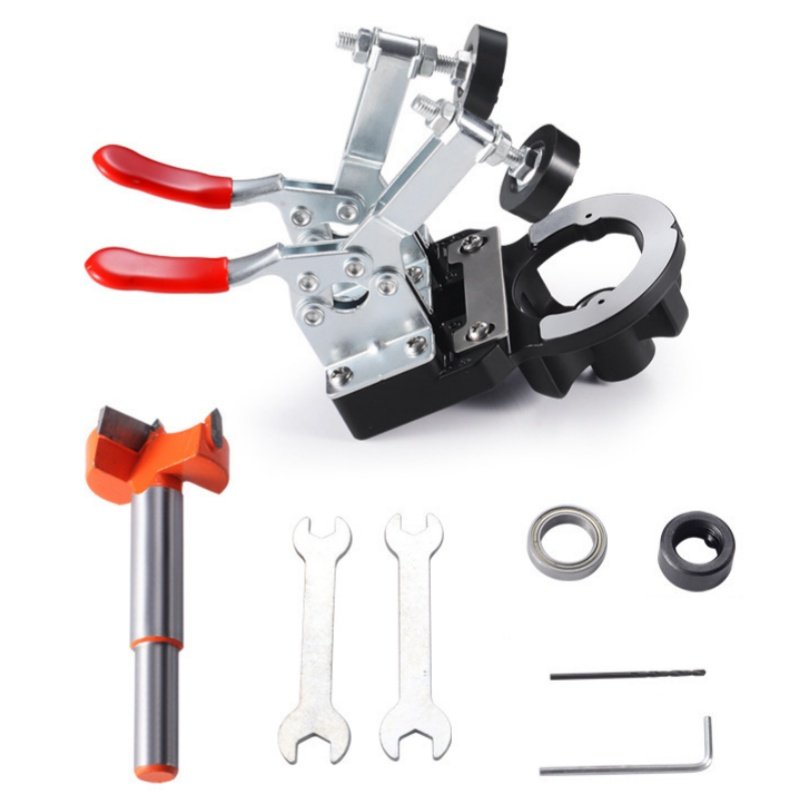
Premium 35mm Concealed Hinge Jig | Upgraded Triple-Bearing Drill Guide | FixPartHub
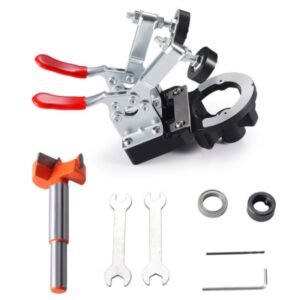
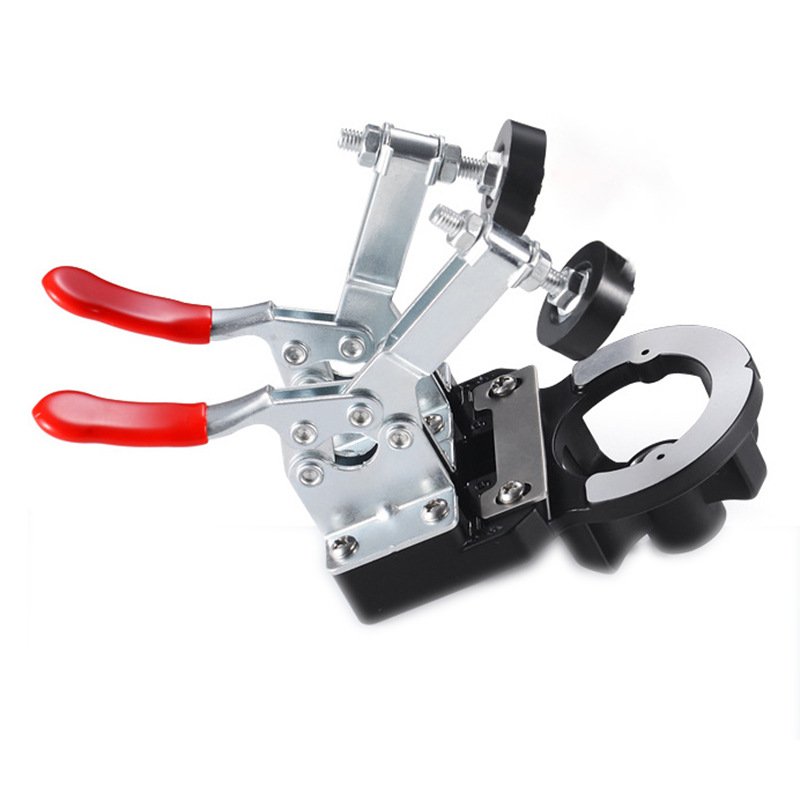
- 🎯 Upgraded Triple-Bearing System: Ditch the flimsy plastic guides. Features upper, middle, and lower steel bearings providing a massive 2CM total sleeve height. Eliminates drill bit wobble for perfectly perpendicular holes.
- 📐 Cabinet-Grade Precision: Designed specifically for boring flawless 35mm concealed “cup” hinges. Guarantees zero edge tear-out on expensive wood, veneer, or melamine cabinet doors.
- ⚙️ Built-In Margins Selectors: Features integrated adjustable scale dials to instantly set the hinge pocket offset distance from the door edge (supports standard 3mm, 4mm, 5mm, and 6mm margins).
- 🗜️ Heavy-Duty Integrated Edge Clamp: Equipped with a robust, built-in fast-action hold-down clamp. Secures the jig firmly to the wood block without the need for secondary locking locking pliers.
- 📦 Complete Rebuild Kit: Comes fully loaded with the anodized alloy positioning frame, a premium carbide-tipped 35mm boring bit, depth stop collar, and hex wrench inside a workshop storage setup.
| Buy More, Save More | Quantity | Discount |
|---|---|---|
| Bulk Discount | 2 | 5% |
| Bulk Discount | 3 – 5 | 10% |
| Bulk Discount | 6 – 19 | 15% |