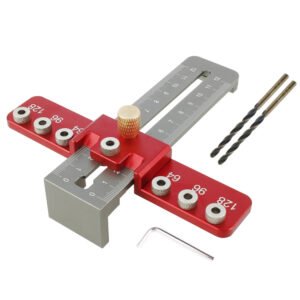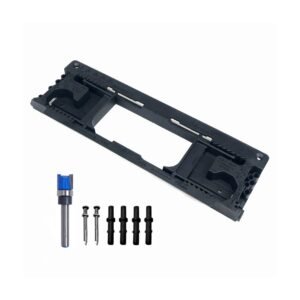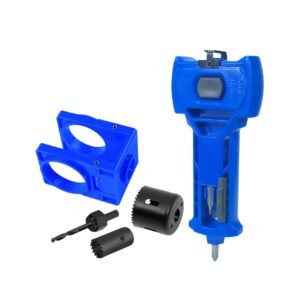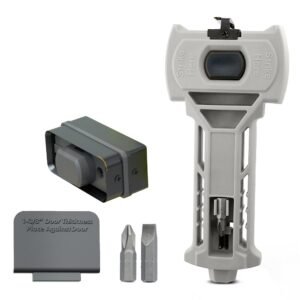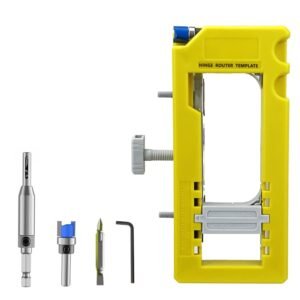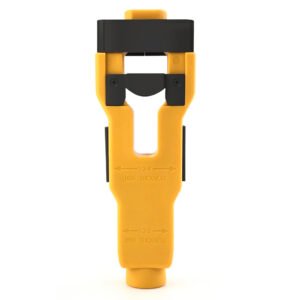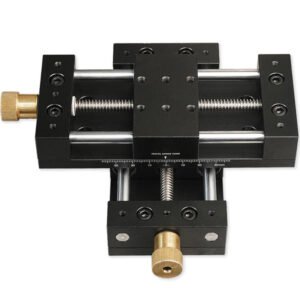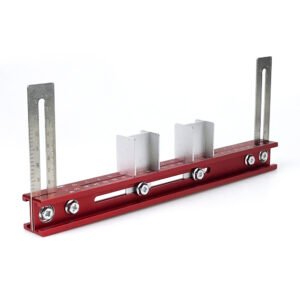
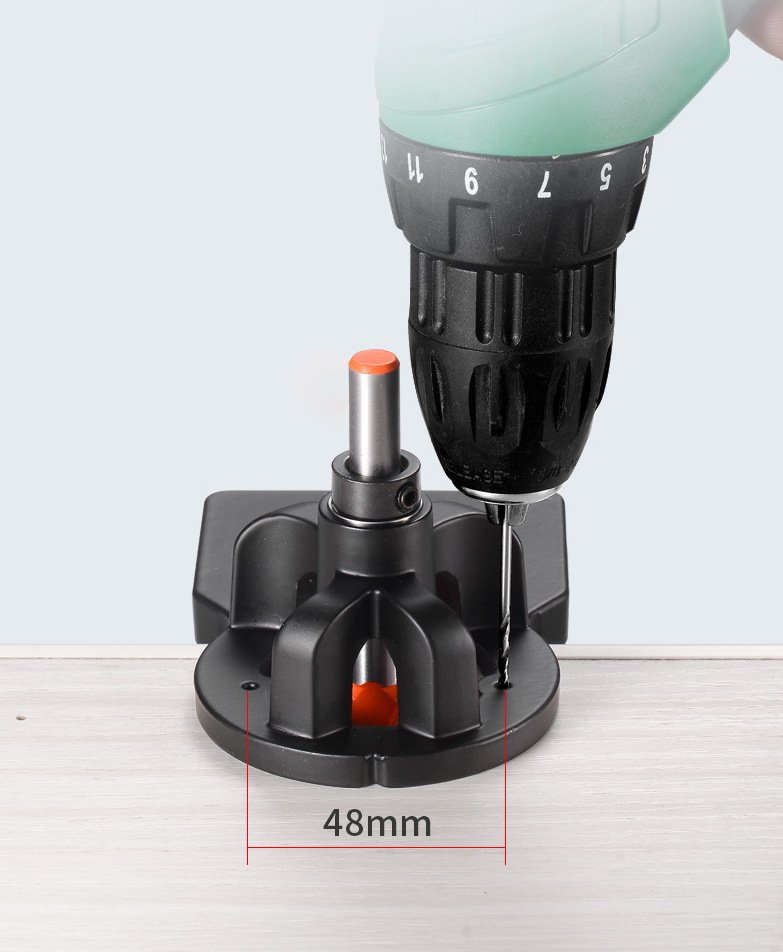
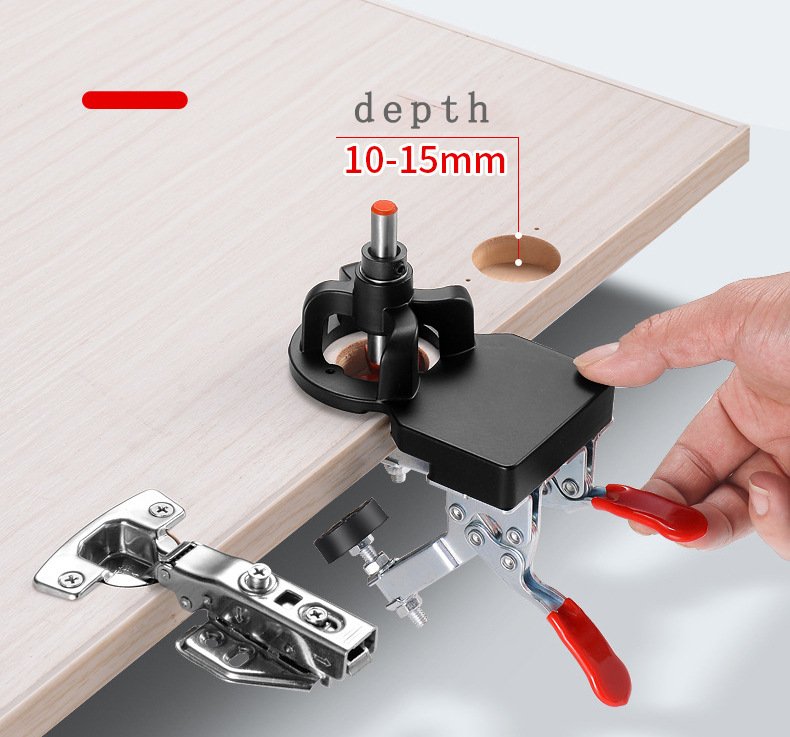
Installing euro-style concealed hinges is a battle against micro-wobble. If your 35mm Forstner bit tilts even a fraction of a millimeter while boring into a wardrobe door, the hinge cup sits crooked, causing the cabinet door to sag, squeak, or gap permanently.
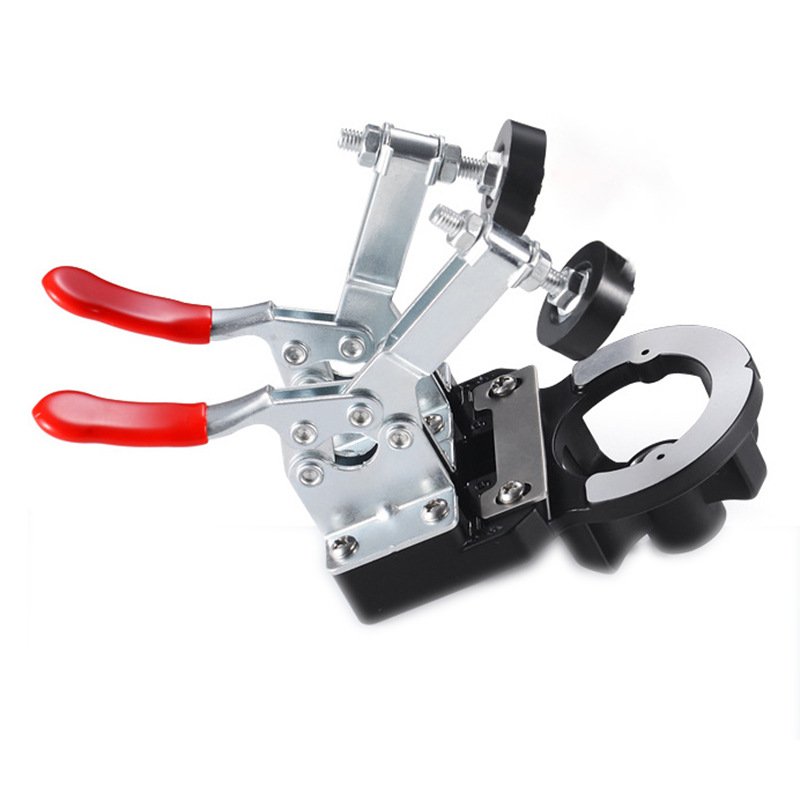
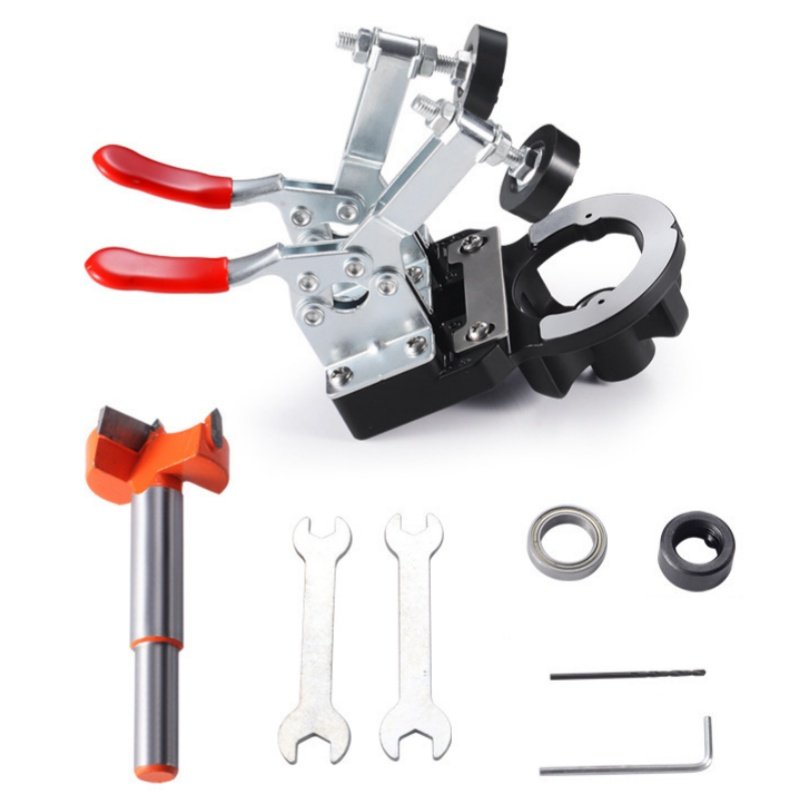
Standard retail hinge templates rely on cheap plastic holes that quickly melt and widen from friction under high-speed drilling. The Premium 35mm Concealed Hinge Jig | FixPartHub Industrial Edition re-engineers this process entirely. By stacking three independent steel ball-bearing sleeves into a solid 2CM metal collar, it locks your drill bit into a rigid, non-deviating axis. Every plunge is dead-straight, clean, and perfectly square.
Upper, middle, and lower steel bearings eliminate drill runout entirely.
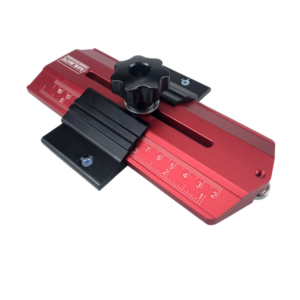
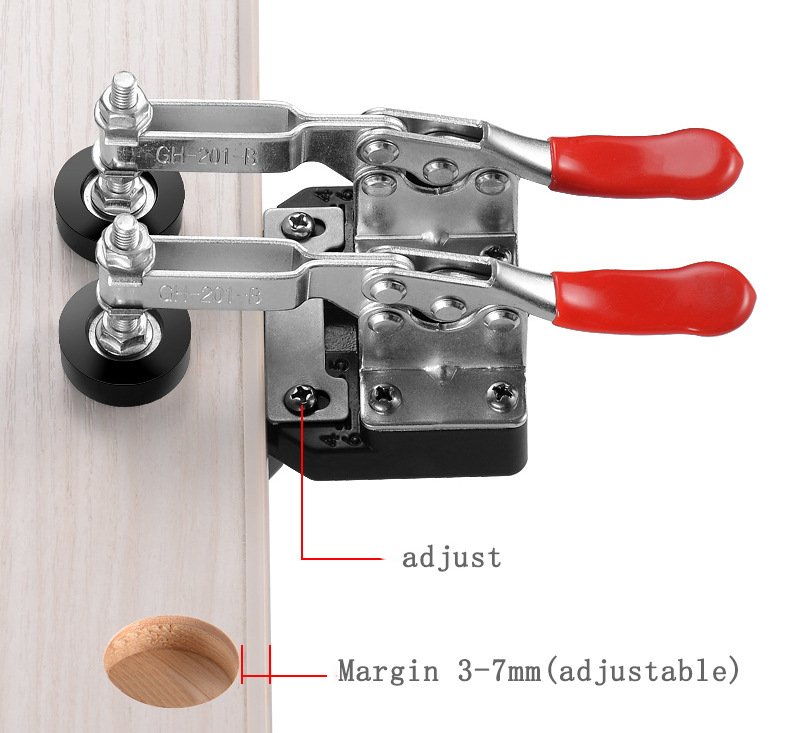
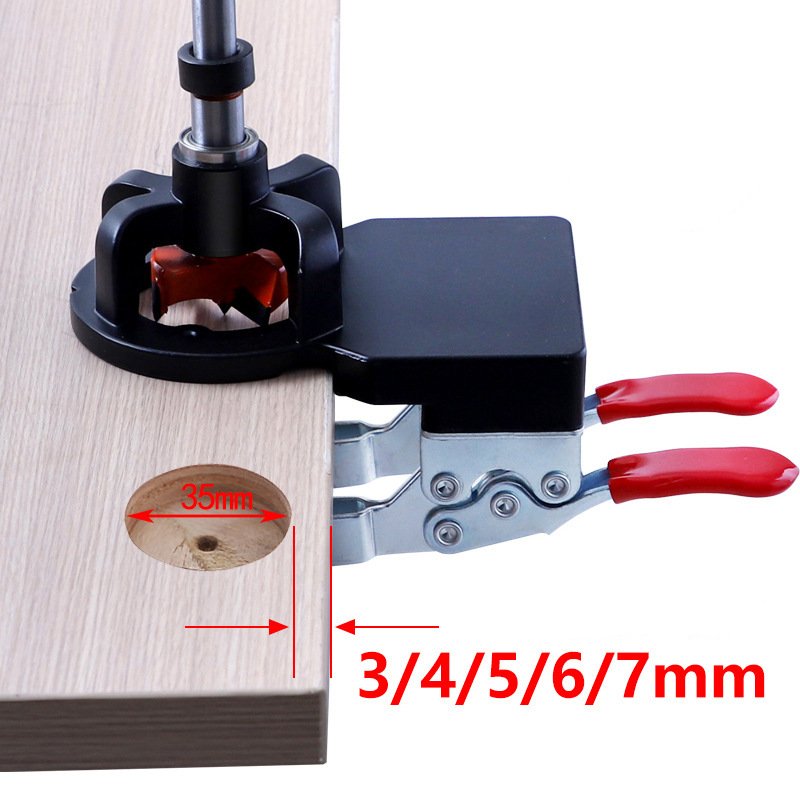
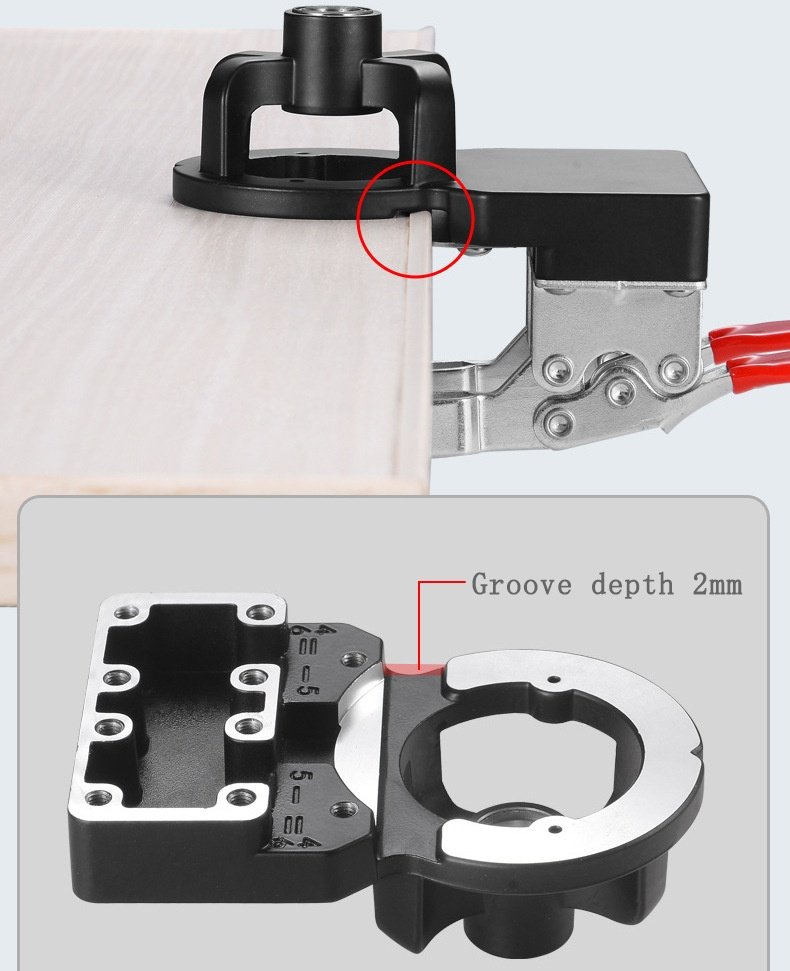
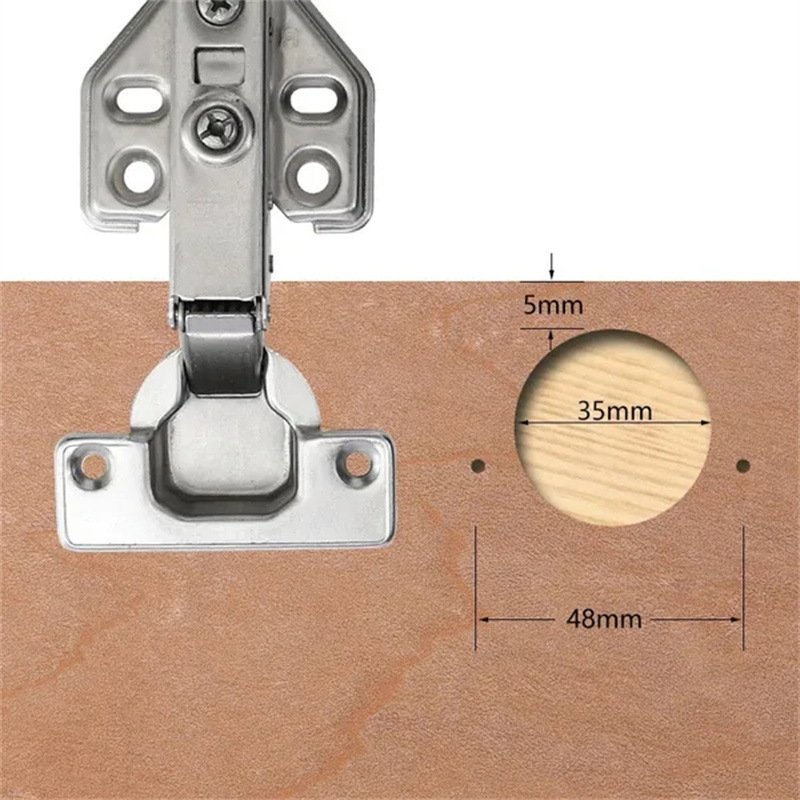
Quickly switch edge backset distances between 3mm, 4mm, 5mm, and 6mm.
Integrated heavy-duty lever clamp handles up to 25mm thick timber boards.
Step-by-Step Cup Hinge Boring
Achieve flawless face-frame or frameless cabinet alignment in four simple steps:
- Set Your Edge Margin: Rotate the side scale dials to your required hinge overlay specification (3mm, 4mm, 5mm, or 6mm from the edge).
- Secure to the Door: Align the template over your vertical height mark on the cabinet door. Engage the heavy-duty built-in toggle clamp until the non-marring rubber pad binds firmly against the wood.
- Calibrate Boring Depth: Slide the premium 35mm carbide bit into the bearing guide. Lock the depth stop collar onto the bit shank to match the precise cup thickness of your hardware hinge (typically 11.5mm to 13mm deep).
- Plunge and Clean: Attach your power drill to the bit hex shank. Run the drill at full speed and smoothly plunge straight down until the stop collar touches the metal rim. Back out the bit to clear shaving chips.
⚠️ Pro Technical Precautions:
Before running a high-volume assembly line on expensive cabinet doors, always perform a trial run on a piece of scrap wood. Ensure the 35mm bit rotates freely within the triple-bearing block before applying power. Keep the internal ball bearings free of compacted sawdust by blasting the sleeve with compressed air after every 5-10 cuts to ensure lifetime fluid rotation.
Tech Q&A: Tool Maintenance & Engineering Insights
❓ Q: Why is a 2CM triple-bearing sleeve better than a traditional single-bearing collar?
A: A single bearing acts only as a pivot point, meaning the drill bit can still tilt left or right at the tip. By stacking three heavy-duty steel bearings over an extended 2CM sleeve, the bit is locked into two distinct plane horizons, completely eliminating micro-wobble and drill bit runout.
❓ Q: Will the included 35mm Forstner-style bit overheat when drilling dense MDF or Melamine?
A: Our included boring bit features premium micro-grain tungsten carbide cutters. Unlike standard carbon steel bits that dull instantly against glues in MDF and plywood, these carbide tips retain their sharp shaving geometry under extreme friction and high temperatures.
❓ Q: Can the built-in edge clamp be adjusted for extra thick timber doors?
A: Yes, the integrated fast-clamping arm features an adjustable threaded tension pad that comfortably handles standard board stocks up to 25mm (approx 1 inch) thick.
At FixPartHub, we replace plastic gimmicks with real workshop engineering. Upgrade your cabinetry bay, eliminate crooked hinges, and execute perfectly flush cabinet door installs every single run.
Yes. The 35mm cup diameter is the universal industry standard for residential euro-style concealed hinges, face-frame hinges, and soft-close hidden cabinet doors.
Absolutely. The premium 35mm boring bit features a standard 1/4-inch hexagonal shank designed to fit securely into any standard cordless drill driver chuck or impact driver quick-release adapter.
No. This upgraded model features a robust, integrated industrial toggle clamp built directly into the anodized frame, locking the template completely immobile against the wood slab.