
Diagnosing Eccentric Load & Bearing Deflection
Standard cutoff wheels have negligible lateral mass. A solid steel ball gouge adapter acts as a massive kinetic flywheel. If the internal thread pitch of the carving adapter is off-center by even a fraction of a millimeter, the resulting centrifugal imbalance translates directly into the tool’s planetary gear system. This lateral pull instantly compromises the armature shaft alignment, forcing the motor to pull excess current to overcome the stall condition, which directly leads to logic board or stator failure.Hardware Tolerances: Precision Machined vs. Cast Knockoffs
Before rebuilding your lower gearbox, verify the metallurgical and machining specs of your adapter. Running uncertified pot-metal accessories on an 11,000 RPM spindle guarantees hardware destruction.| Diagnostic Metric | OEM/High-Spec Ball Gouge | Cheap Cast Aftermarket |
|---|---|---|
| Machining Runout Tolerance | < 0.02mm (Virtually zero chatter) | > 0.15mm (Gearbox destroying) |
| Thread Class (5/8″-11 or M14) | Class 3B Precision CNC Milled | Class 1B Sloppy / Die-Cast |
| Base Metallurgy | 4140 Chromoly / Carbon Steel | Zinc Alloy / Sintered Scrap |
| Stator Ohm Load (Under Load) | Stable within factory specs | Spikes 300% above rated amperage |
Teardown & Adapter Seating Workflow
1. Spindle Runout Verification
Strip the tool down to the bare output shaft. Mount a magnetic dial indicator to the metal gear housing and place the needle on the bare spindle threads. Rotate the spindle manually. If lateral deflection exceeds 0.002″, your output bearing is already compromised and requires pressing out before mounting heavy accessories.2. Flange Seat Clearance
Remove the standard locking nut, but retain the inner backing flange. The base of the ball gouge adapter must sit perfectly flush against the inner flange. Any gap or debris here will cause the adapter to seat off-axis, instantly reproducing the eccentric chatter under load.3. Thread Integrity & Anti-Seize
Clean the arbor threads with a wire brush. Apply a micro-drop of high-temp anti-seize to the base threads. Because of the heavy kinetic mass, the gouge will self-tighten aggressively during deceleration; without anti-seize, removal will require a breaker bar and risk sheering the spindle lock pin.Reassembly Calibration & Load Testing
- Free-Spin Resonance Check: Clamp the tool securely in a bench vise. Power on and let it run at absolute peak RPM for 60 seconds without load. There should be zero oscillating vibration translating into the vise.
- Thermal Differential: Power down and use an infrared thermometer on the gearbox head. Temperatures exceeding 130°F (54°C) after a 1-minute no-load spin indicate severe friction, meaning the adapter is unbalanced or the bearing is failing.
- Scrap Load Ramp-Up: Begin carving on end-grain scrap wood at shallow 15-degree attack angles. Listen for RPM drop. A healthy stator and properly machined adapter will maintain RPM with minimal voltage sag.
- Amp Clamp Verification: Put an AC clamp meter over one of the power cord leads. Carve into a test block. If the amp draw exceeds the tool’s data plate continuous rating by more than 15%, your attack angle is too steep or the gouge is dangerously dull, risking logic board failure.
A: Violent vibration is caused by eccentric load. This happens when the ball gouge has poor machining tolerances, causing off-center rotation, or your tool’s lower spindle bearing is already worn out, allowing the shaft to deflect under the heavy rotational mass.
A: Remove all accessories and the inner flange. Mount a magnetic base dial indicator to the metal gear housing and place the needle on the bare spindle threads. Rotate the shaft by hand. Runout exceeding 0.002 inches indicates a failing bearing that will be destroyed by a heavy carving adapter.
A: You must verify your tool’s spindle spec. Most standard 4.5-inch to 5-inch universal compatible tools use either a 5/8″-11 thread (common in North America) or an M14 thread (common in European/Asian markets). Cross-threading these will permanently destroy the output shaft.
A: Heavy mass adapters self-tighten under load. Disconnect the power, depress the spindle lock, and use a dedicated spanner wrench with a swift, controlled shock. Do not use locking pliers on the cutting head, as this will destroy the self-clearing edge geometry.
-300x300.jpg)
-300x300.jpg)
-300x300.jpg)
.jpg)
.jpg)
.jpg)
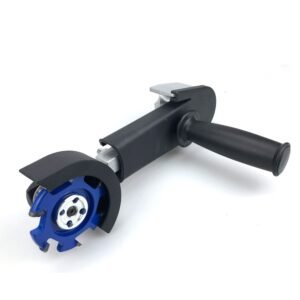
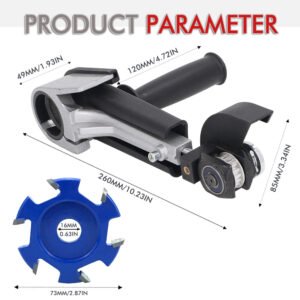
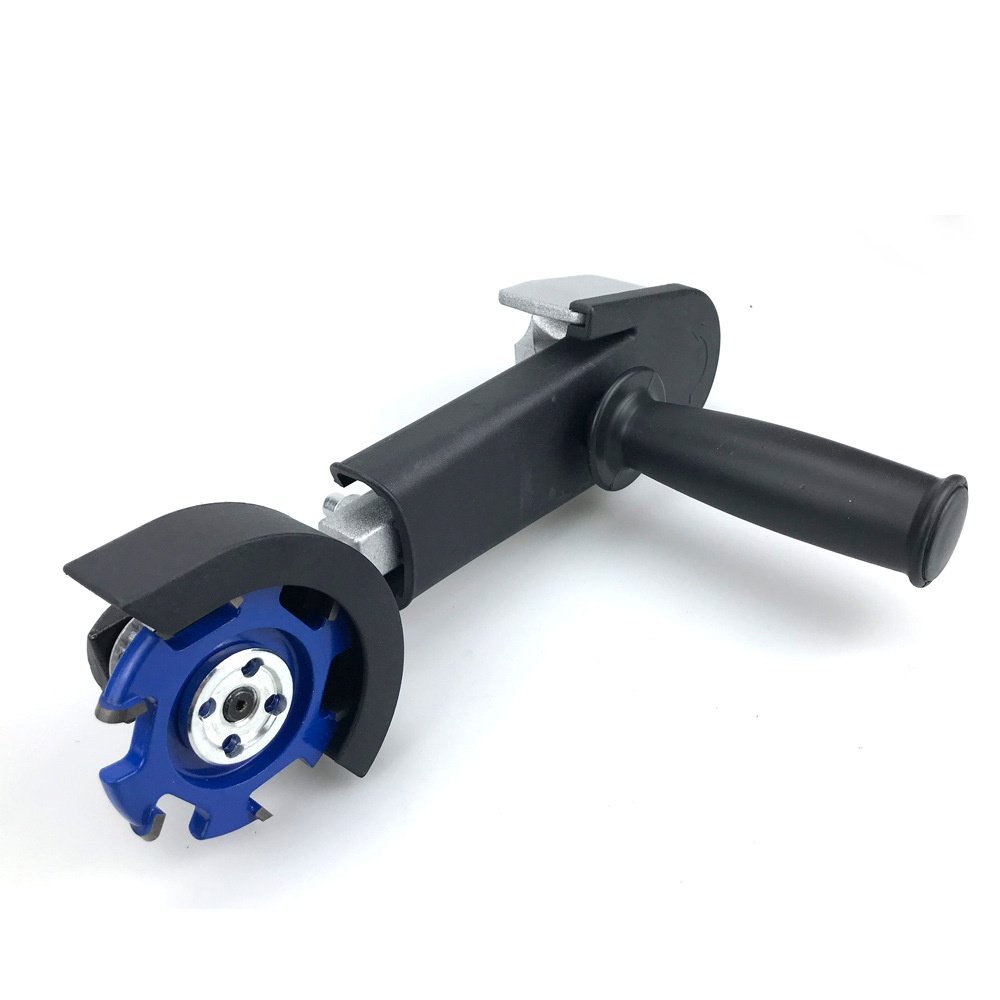
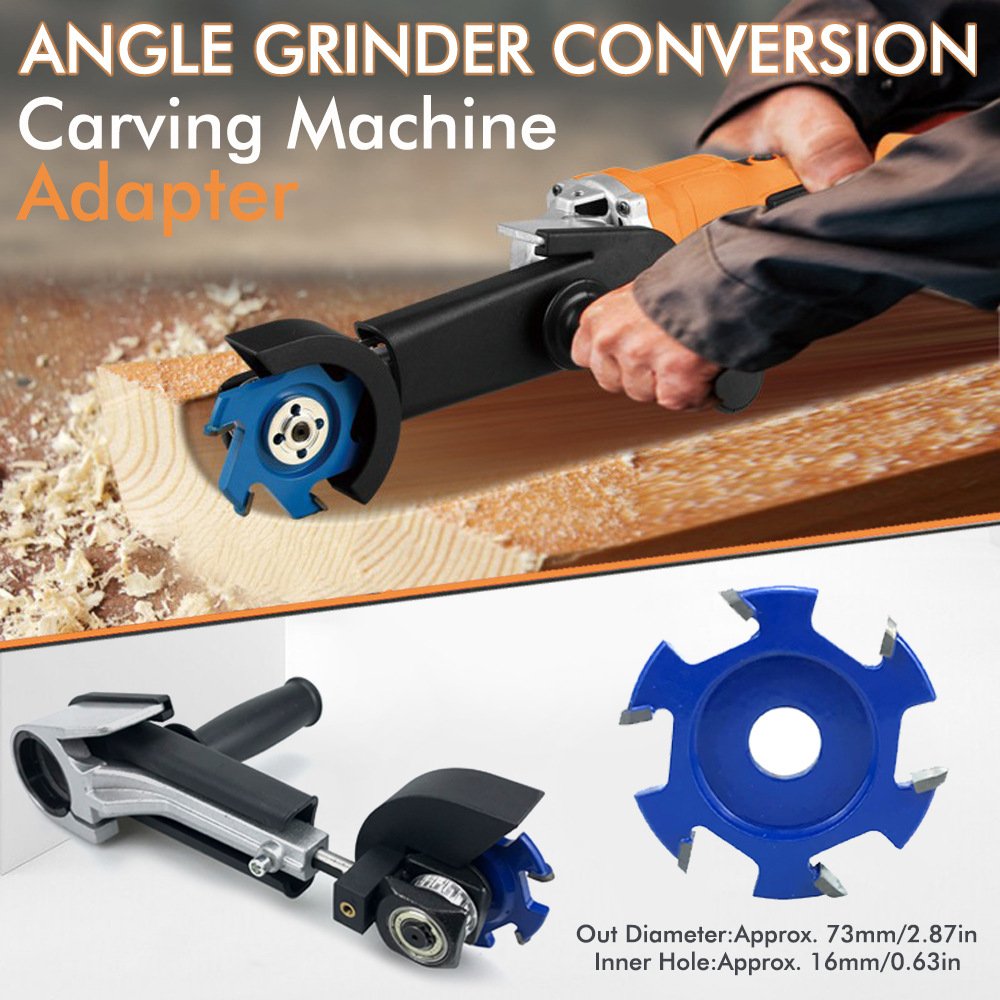
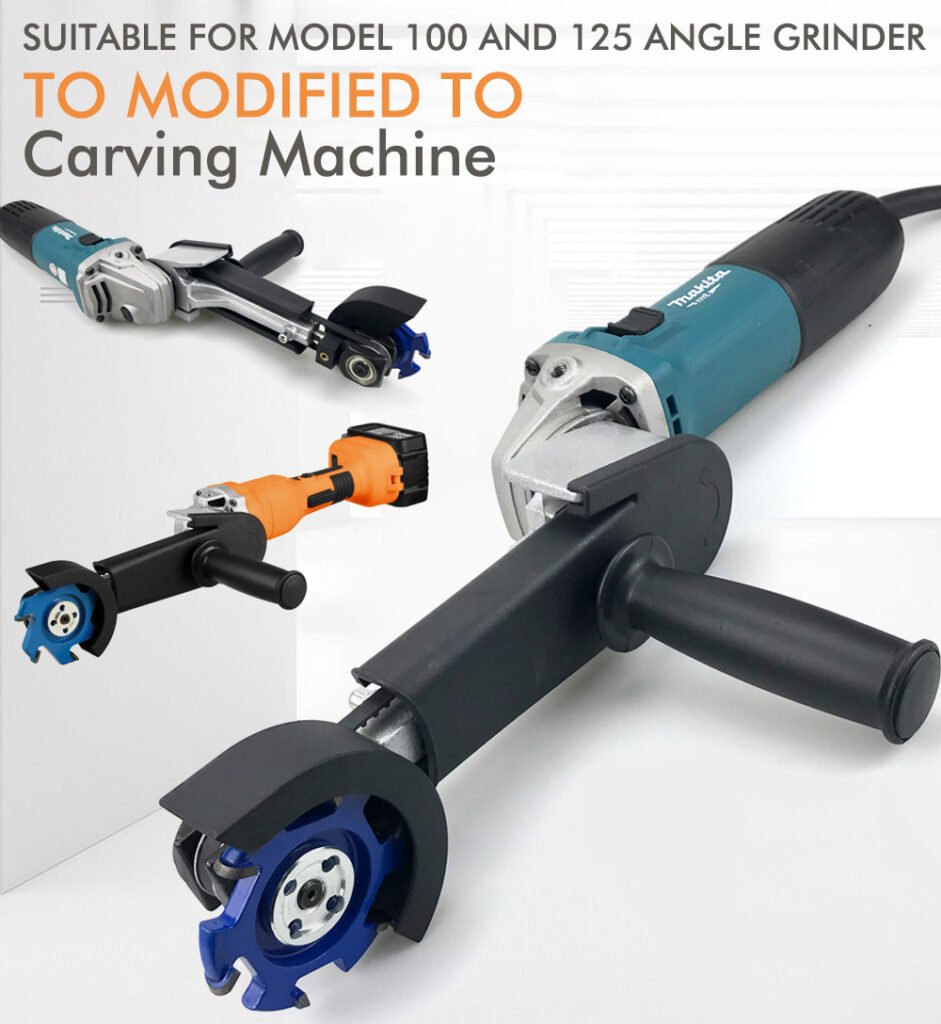
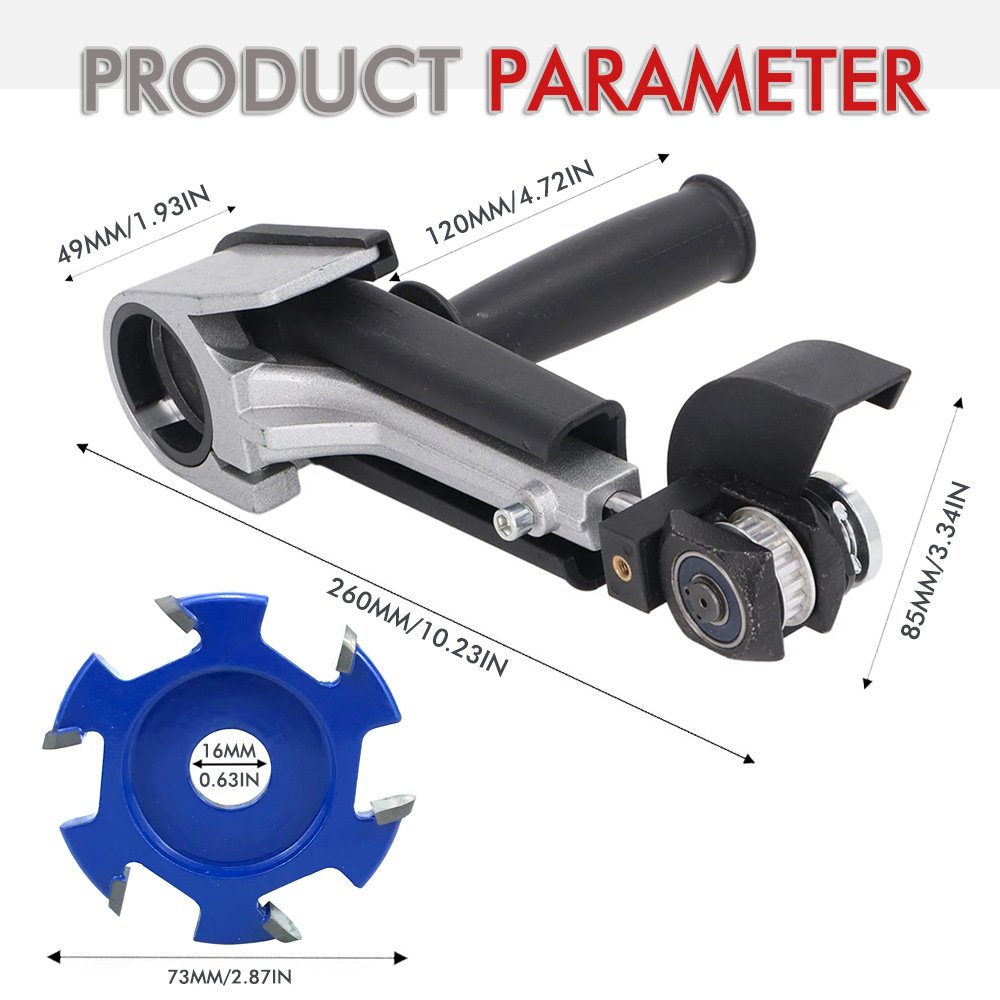
Premium Angle Grinder to Wood Carving Adapter Kit | Universal 5/8″-11, M14, M10 Thread Ball Gouge Mortise Jig | FixPartHub
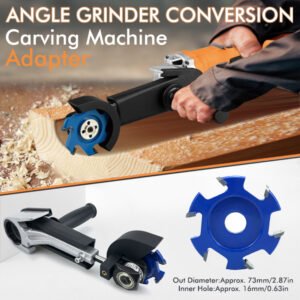
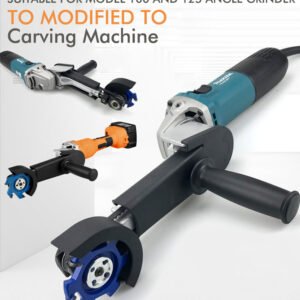
- 🔥 Instant Power Carving Re-engineering: Stop buying standalone expensive woodworking routers. This industrial kit transforms your standard angle grinder into a high-torque, heavy-duty hollow carver and mortiser in 10 seconds.
- ⚙️ Engineered Anti-Wobble Rigidity: Features a thick, dual-axis safety stabilization base that clamps firmly to the grinder collar. Eliminates dangerous torque kicks and micro-vibrations for absolute routing control.
- 📐 Seamless 3-Variant Global Fitment: Available in M10, M14, and North American standard 5/8″-11 TPI threads, guaranteeing flawless integration with your existing shop machinery.
- 💪 True Carbide Sphere Cutting: Equipped with a premium heavy-duty spherical ball gouge bit that rapidly hollows out wooden spoons, bowls, and large sculpting cavities with zero clogging.
- 🔒 Depth & Guidance Mastery: Includes a fully adjustable parallel guide fence panel to set precise trenching depths and linear paths, making it ideal for structural table skirt recessing.
| Buy More, Save More | Quantity | Discount |
|---|---|---|
| Bulk Discount | 2 | 5% |
| Bulk Discount | 3 – 5 | 10% |
| Bulk Discount | 6 – 19 | 15% |